
WPPF and WWF in Pakistan: profit share and welfare fund for employers
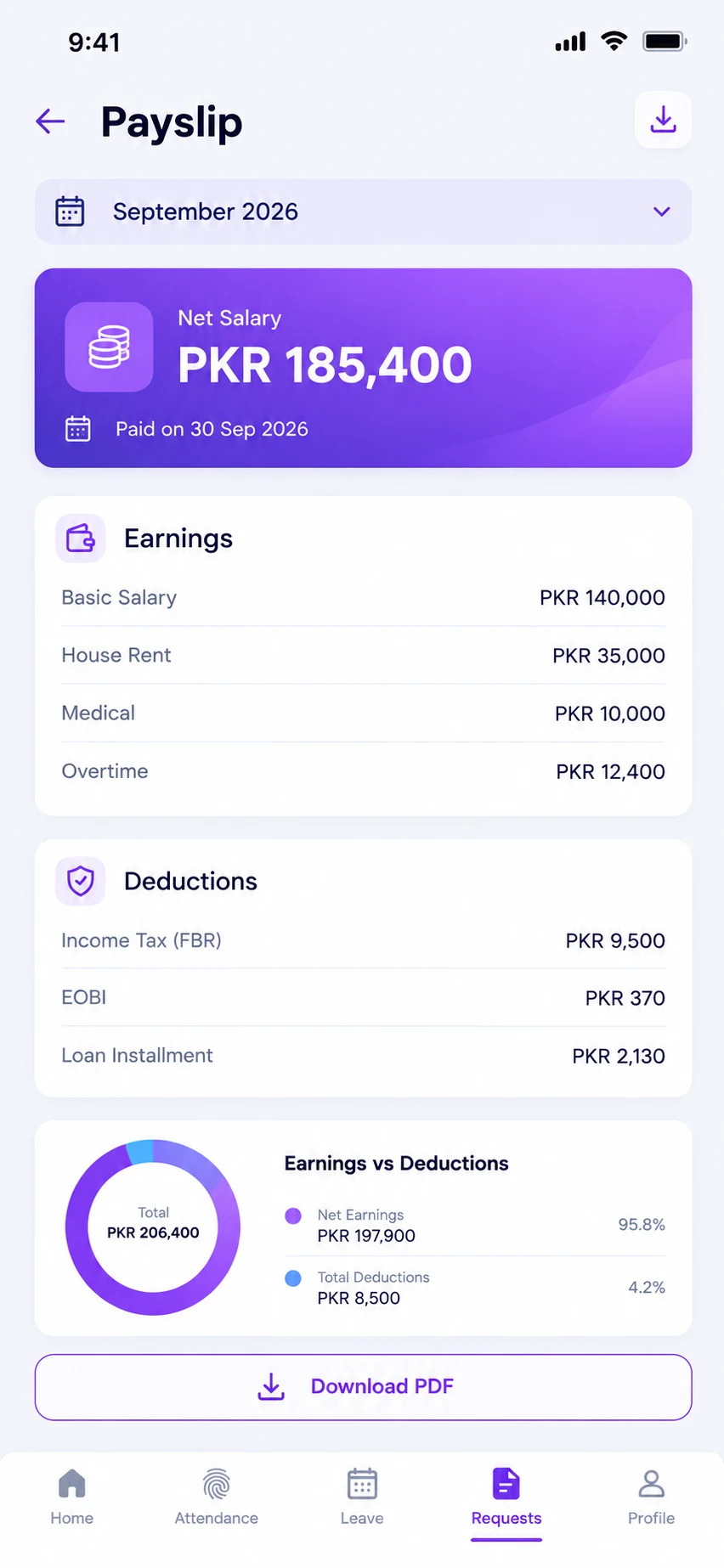
WPPF and WWF are easy to mix up with monthly payroll deductions such as [EOBI](/guides/eobi-contribution-guide) or [PESSI](/guides/pessi-contribution-guide). They are not the same thing. The workers' profit participation fund is an annual share of company profits for eligible workers. The workers' welfare fund is a contribution the establishment pays on its income, used for worker housing, education and other welfare schemes. Neither amount is usually taken out of an employee's monthly net salary the way income tax or the employee's EOBI share is. This guide stays inside the texts checked on 8 November 2026 and says so when a provincial rule may differ.

They are two different statutory schemes
The Companies Profits (Workers Participation) Act, 1968, as published on the Punjab Laws website, sets up a scheme under which a company that is covered must put five percent of its profits into a workers' participation fund and then allocate that money to eligible workers in units. Sindh has its own statute, the Sindh Companies Profits (Workers Participation) Act, 2015, published by the Sindh Directorate of Labour. Other provinces may apply a provincial version or later amendments. Always read the Act that names your establishment.
The Workers' Welfare Fund is a separate contribution. The federal Workers Welfare Fund's own "Source of Income" page describes two inflows under the historic framework: a two percent contribution on assessable income under the Workers' Welfare Fund Ordinance, 1971 when that income exceeds Rs. 500,000 in an accounting year, and the leftover profit that remains after workers have been allocated their WPPF units. After the 18th Amendment, Punjab, Sindh and other provinces have their own workers welfare fund laws and boards. Who collects the money, and how "total income" or "assessable income" is measured, is set in the law that applies to you. Confirm the current provincial text and filing channel before you book the expense.
Do not fold WPPF or WWF into the monthly EOBI, PESSI or SESSI lines, and do not treat them as a provident fund percentage. Those are different statutes with different bases.
When the WPPF scheme applies
The Punjab text of the 1968 scheme says it applies to companies engaged in industrial undertakings that satisfy any one of these conditions, and to any other companies the Government notifies:
- The number of workers employed by the company at any time during a year is 50 or more.
- The paid-up capital of the company on the last day of its accounting year is Rs. 20 lacs (Rs. 2,000,000) or more.
- The value of the fixed assets of the company (at cost) on the last day of the accounting year is Rs. 40 lacs (Rs. 4,000,000) or more.
Meeting any one of those three tests is enough. A company with fewer than 50 workers can still be covered if its paid-up capital or fixed assets cross the line. The scheme is written for companies engaged in industrial undertakings, not for every shop or office by default. If you are unsure whether the business is an "industrial undertaking" under the Act that applies, take advice before you skip the fund.
Covered companies must establish the fund when the year's accounts are finalised, and pay five percent of that year's profits into it, not later than nine months after the close of the year (the Sindh 2015 Act states this timeline expressly; follow the matching section in the Act that covers you). Interest can become payable if allocated money that the company is allowed to use in the business is not handled as the scheme requires.
Who can receive a WPPF share
The scheme says all workers are eligible, but a worker who does not complete six months of employment with the company during that year of account does not participate in the fund for that year. Joining date therefore matters as much as headcount. Keep start dates accurate in the employee record so finance is not guessing from a spreadsheet at year end.
"Worker" is defined in the Act that applies. Do not assume every salaried manager is included, and do not assume a contractor's labour is excluded, without reading that definition.
How units are divided
A worker's share is expressed in units or fractions of units, worked out to two decimal places, of a face value of Rs. 10. The available units are split across three wage categories so that a worker in the first category gets four units for each two units a worker in the second category gets, and for each one unit a worker in the third category gets. In plain words, lower-paid eligible workers receive a larger share of the allocation.
The rupee bands that define those three categories are not the same in every province, and they have been amended:
- In the Punjab text, as substituted, category 1 is workers whose average monthly wages are not less than the government minimum wage for unskilled workers; category 2 is workers whose average monthly wages exceed that minimum but by no more than five thousand rupees; category 3 is everyone above that upper line.
- In Sindh's 2015 Act, category 1 is workers drawing the average minimum monthly wages fixed by Government; category 2 is workers above that minimum but not above twenty thousand rupees; category 3 is workers above twenty thousand rupees.
Do not copy Sindh's twenty-thousand-rupee line onto a Punjab factory, or Punjab's "minimum wage plus five thousand" line onto a Sindh mill. Average monthly wages are rounded as the scheme says (Sindh's text rounds them to the nearest Rs. 10). Use the minimum wage by province figure that was in force for that accounting year when you place someone in category 1.
The units available to each category are then divided equally among the workers in that category.
Individual caps and leftover money
The scheme also caps what one worker can take from the annual allocation. Sindh's 2015 Act says no worker shall, in any one year, be entitled out of the annual allocation to units exceeding four times the minimum wages for an unskilled worker, in so far as that allocation relates to the company's five percent profit payment. Any amount left after units have been allocated this way is transferred to the fund set up under the Workers' Welfare Fund Ordinance, 1971. No individual worker has a claim on that leftover by holding units.
The federal Workers Welfare Fund describes the same leftover as one of its sources of income. If a provincial WWF law now receives that leftover instead of the federal Ordinance, follow the provincial text. The practical point for finance is the same: leftover WPPF is not extra bonus to be paid out informally, and it is not retained as company profit.
A worked example (illustrative only)
The rupee figures below are made up so the 4:2:1 arithmetic is easy to follow. They are not a notified profit, wage or cap.
Suppose the company's annual WPPF allocation is Rs. 1,700,000, and six workers qualify for the year: three in category 1, two in category 2 and one in category 3. The weight of the group is (3 × 4) + (2 × 2) + (1 × 1) = 17. One weighted share is Rs. 1,700,000 ÷ 17 = Rs. 100,000.
- Each category 1 worker is allocated 4 shares, or Rs. 400,000, before any cap.
- Each category 2 worker is allocated 2 shares, or Rs. 200,000, before any cap.
- The category 3 worker is allocated 1 share, or Rs. 100,000, before any cap.
If the applicable cap (for example four times the unskilled minimum wage in the Sindh formulation) is lower than a worker's raw allocation, that worker stops at the cap and the unused rupees become leftover for the welfare fund. Recalculate with your real profit, your real eligible headcount and the cap in the Act that applies. Then have finance and your adviser sign off.
What WWF is, and what it is not
On the federal Workers Welfare Fund's published description, an industrial establishment contributes two percent of its assessable income under the 1971 Ordinance when that income exceeds Rs. 500,000 in an accounting year. The leftover WPPF amount described above is a second inflow. The money funds welfare measures such as housing, education scholarships, marriage grants and death grants, which the Fund and the provincial workers welfare boards administer.
WWF is an establishment-level contribution. It is not an amount you deduct from each worker's monthly salary slip the way you deduct the employee's EOBI share or income tax under section 149. Putting "WWF" in the employee deduction column is a common spreadsheet mistake and it underpays the worker.
Because provincial WWF laws now exist, the definition of income, the Rs. 500,000 threshold, the two percent rate and the collector may be restated locally. Punjab, for example, has its own Workers Welfare Fund statute and a provincial board (PWWF). Read that statute, not only the federal Ordinance, if the establishment is in Punjab.
What payroll and HR should keep
WPPF is an annual allocation from profits, not a monthly payroll percentage. The monthly system still has to supply the data finance needs at year end:
- A reliable list of workers, join dates and average monthly wages so eligibility (six months) and the unit category can be proved.
- Separate statutory lines on the payslip for items that really are monthly deductions, so WPPF and WWF never hide inside "other deductions".
- A year-end working paper that starts from audited or management profit, applies the five percent, allocates units, applies the cap and shows the leftover transferred to WWF.
- The same trail for the two percent WWF contribution on the income base the applicable law uses.
Manufacturing and textile units are often asked about WPPF and WWF in the same audit that reviews overtime and minimum wage. StreamHCM keeps the service dates, wage components and payroll history that those workings need, next to payroll compliance items such as EOBI and social security. The guides index collects the contribution and wage pages that usually sit in the same file.
About this guide
Checked against the Punjab text of the Companies Profits (Workers Participation) Act, 1968 on punjablaws.gov.pk (including the published category wording), the Sindh Companies Profits (Workers Participation) Act, 2015 PDF issued by the Sindh Directorate of Labour, and the Workers Welfare Fund's published "Source of Income" page, on 8 November 2026. It is general information for employers, not legal, tax or accounting advice. Provincial amendments and later notifications can change a threshold, a category band, a cap or the collector. Confirm the text that applies to your establishment before you book or distribute any amount.
Frequently asked questions
No. WPPF is an annual allocation of company profits into a workers' participation fund, then distributed in units to eligible workers. It is not a monthly payroll percentage like the employee's EOBI share.
Covered companies pay five percent of their profits for the year into the fund, by the deadline in the Act that applies (commonly not later than nine months after the year ends).
Workers who complete six months of employment with the company during that year of account. The Act's definition of "worker" still has to be checked.
In a 4:2:1 pattern across three wage categories, so lower-paid eligible workers receive more units. The rupee lines that separate the categories differ by province.
After units and any individual cap are applied, the leftover is transferred to the workers' welfare fund. Individual workers do not have a claim on that leftover.
No. Under the federal description, it is two percent of the establishment's assessable income when that income exceeds Rs. 500,000 in the year, plus leftover WPPF. It is not an employee salary deduction. Confirm the provincial law that now applies to you.
Sources
- Companies Profits (Workers Participation) Act, 1968 (punjablaws.gov.pk)punjablaws.gov.pk
- Sindh Companies Profits (Workers Participation) Act, 2015 (Sindh Directorate of Labour PDF)dglabour.gos.pk
- Workers Welfare Fund, Source of Incomewwf.gov.pk
- Workers' Welfare Fund Ordinance, 1971 (Pakistan Code)pakistancode.gov.pk
See StreamHCM running your HR
Request a 14-day trial. No card is taken on this site.