
Provident fund in Pakistan: what employers actually have to set up
A provident fund is not EOBI. There is no single percentage on this page that every private employer in Pakistan must deduct, because the law does not impose one the way it imposes EOBI. A provident fund is a scheme the employer establishes, usually under a trust deed. Tax recognition, and whether the employer's contribution is deductible, then depend on the Income Tax Ordinance 2001. This guide stays inside what that Ordinance says and leaves out contribution caps that were not confirmed from the current official text.
A provident fund is a scheme, not a nationwide rate
Employers often ask for "the provident fund rate" the way they ask for the EOBI rate. They are different animals. EOBI is a federal social-insurance contribution with a rate and a wage base set by the institution. A provident fund is a savings arrangement between the employer and the employees. The employee's share is deducted from salary and credited to that employee's account. The employer's share, if the scheme has one, is an employer cost credited to the same account. The deed, the scheme rules and the employment contract decide the percentage. The statute does not hand you one number to type into payroll for every company in the country.
Two other schemes get mixed up with this. Workers' profit participation is a share of profits for eligible companies, not a monthly percentage of salary. Social security, PESSI in Punjab and SESSI in Sindh, is an employer contribution for medical and cash benefits. Running all three through one payslip line called "fund" makes the register wrong and the tax computation worse.
Smaller employers often have no provident fund at all, and that can be lawful. Do not create a deduction because a payroll template has a blank for it. Deduct only what the scheme rules, a contract or a statute that you have actually checked requires.
Decide the rules before the first deduction
Payroll can only repeat what the scheme already says. Write these down in the deed or the rules, then configure them. Guessing at month end is how employee balances drift from the ledger.
Who may join, and from which day of service. A scheme that covers only permanent staff should not silently deduct from trainees or daily wagers.
The employee's contribution as a proportion of salary, and which pay components count as salary for that proportion. Basic only and gross pay produce different rupees.
The employer's contribution, and whether it matches the employee, is lower, or is zero. There is no statutory match rate stated in this guide.
When each side is credited. A deduction that leaves the salary but does not reach the member's account is the complaint trustees hear first.
What happens on resignation, dismissal, retirement and death, including vesting of the employer's share. Exit payroll has to follow the deed, not a verbal policy.
Who the trustees are, where the money is kept, and how a member can see the balance. A deduction with no statement is how staff decide the fund is not real.
Recognition under the Income Tax Ordinance 2001
Section 2(48) of the Income Tax Ordinance 2001, in the Federal Board of Revenue's published text of the Ordinance, defines a "recognised provident fund" as a provident fund recognised by the Commissioner in accordance with Part I of the Sixth Schedule. Recognition is an act of the Commissioner. A fund does not become recognised because the payslip uses the words, or because the company has always run one.
Part I of the Sixth Schedule is where the conditions for that recognition sit. They deal with who the fund may cover and how employee and employer contributions are structured. This guide does not repeat numeric caps from Part I. The copy of the Ordinance extracted for this page defines the term and the deduction rules below, and it points to the Schedule, but it did not include a reliable full text of the Schedule's rupee limits. Read Part I in the FBR PDF, or ask the Commissioner's office, before you tell an employee that a contribution is tax-free or that a particular percentage is the maximum the employer may pay.
An unrecognised fund can still exist as a private scheme. It just does not get the tax treatment the Ordinance reserves for a recognised one. Label it honestly on the payslip. Calling an unrecognised fund "recognised PF" is a tax problem, not a branding choice.
When the employer's contribution is deductible
Section 21 of the Ordinance lists deductions that are not allowed when computing income from business. Two clauses are the ones a payroll lead should be able to point at.
Clause (e) disallows any contribution to a fund that is not a recognised provident fund, an approved pension fund, an approved superannuation fund or an approved gratuity fund. If the fund has none of those statuses, the employer's contribution is not a deductible expense under that clause. Paying it may still be required by your own deed. Deductibility is a tax question on top of that.
Clause (f) disallows a contribution to a provident or other fund set up for the employees unless the employer has made effective arrangements to secure that tax is deducted under section 149 from payments the fund makes which are taxable as salary. Recognition is not a substitute for that arrangement. The trustee paying a taxable amount to a leaver still has to sit inside the salary withholding system.
Clause (ea) is the one people paste onto provident funds by mistake. It limits the deductible amount to fifty percent of a contribution to an approved gratuity fund, an approved pension fund or an approved superannuation fund. The clause, as published in the FBR text, does not name provident funds. Do not apply that fifty percent cap to a recognised provident fund unless a provision you have read actually says so.
Employee tax on salary, including which part of a fund payment is taxed in the month it is paid, belongs with the salary tax guide for 2026-27 and your adviser. This page does not invent an exemption threshold.
Provident fund and gratuity are not automatically both due
The gratuity and final settlement guide explains the Industrial and Commercial Employment (Standing Orders) Ordinance 1968 and points at provincial replacements, including Sindh's standing orders law and the Punjab Labour Code 2026. The traditional standing-order rule treats a qualifying provident fund as an alternative to statutory gratuity, not as a second payment stacked on top. A company scheme or contract can be more generous and provide both. The deed wins where it is better than the legal minimum. It does not win where it tries to pay less than a statute that still applies.
Final settlement is where this gets expensive. Someone leaving needs unpaid salary, approved overtime, leave that the applicable law says must be encashed, and either gratuity or the provident fund balance the scheme owes, or both if your rules require both. Doing that from a spreadsheet that never held the monthly contributions is how the balance on the letter disagrees with the sum of the payslips. Keep the contribution history in the same system as the exit calculation.
How the two shares should look on the payslip
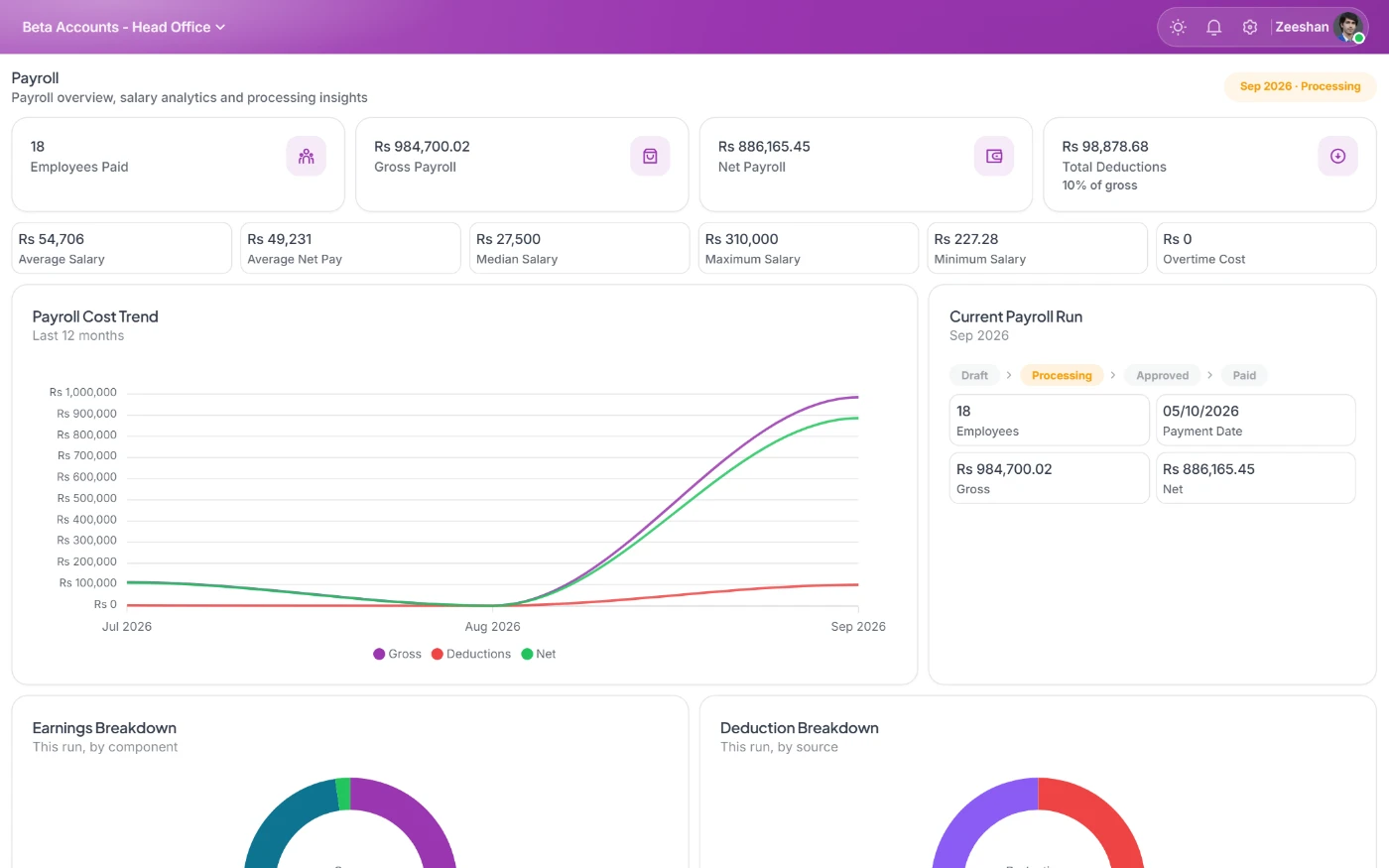
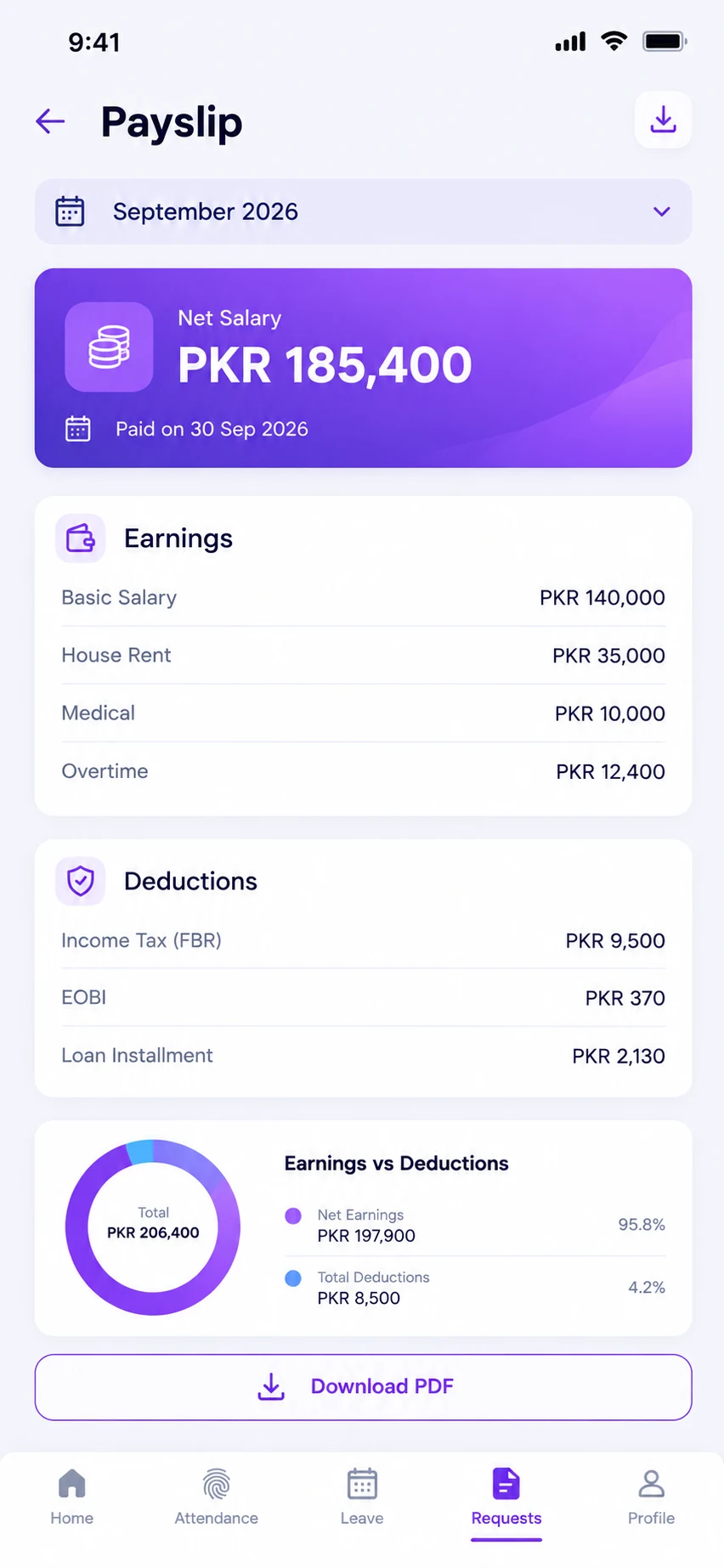
The employee's contribution reduces net pay. It belongs in the deductions column, next to tax and the employee's EOBI share, with the percentage and the salary it was calculated on visible enough that the employee can re-do the sum. The employer's contribution does not reduce net pay. It belongs on the payroll register and in the cost report, as an employer cost, the same way the employer's EOBI share does. Deducting the employer's share from the employee as well means the employee has funded both sides and the account will not match the deed.
Show the year-to-date balance somewhere the employee can open, not only on a trustee statement six months later. Most "the company is keeping my PF" complaints are a missing statement, not a missing payment. A line on the payslip plus a balance in the employee app answers it before it becomes a grievance.
Setting the fund up in payroll
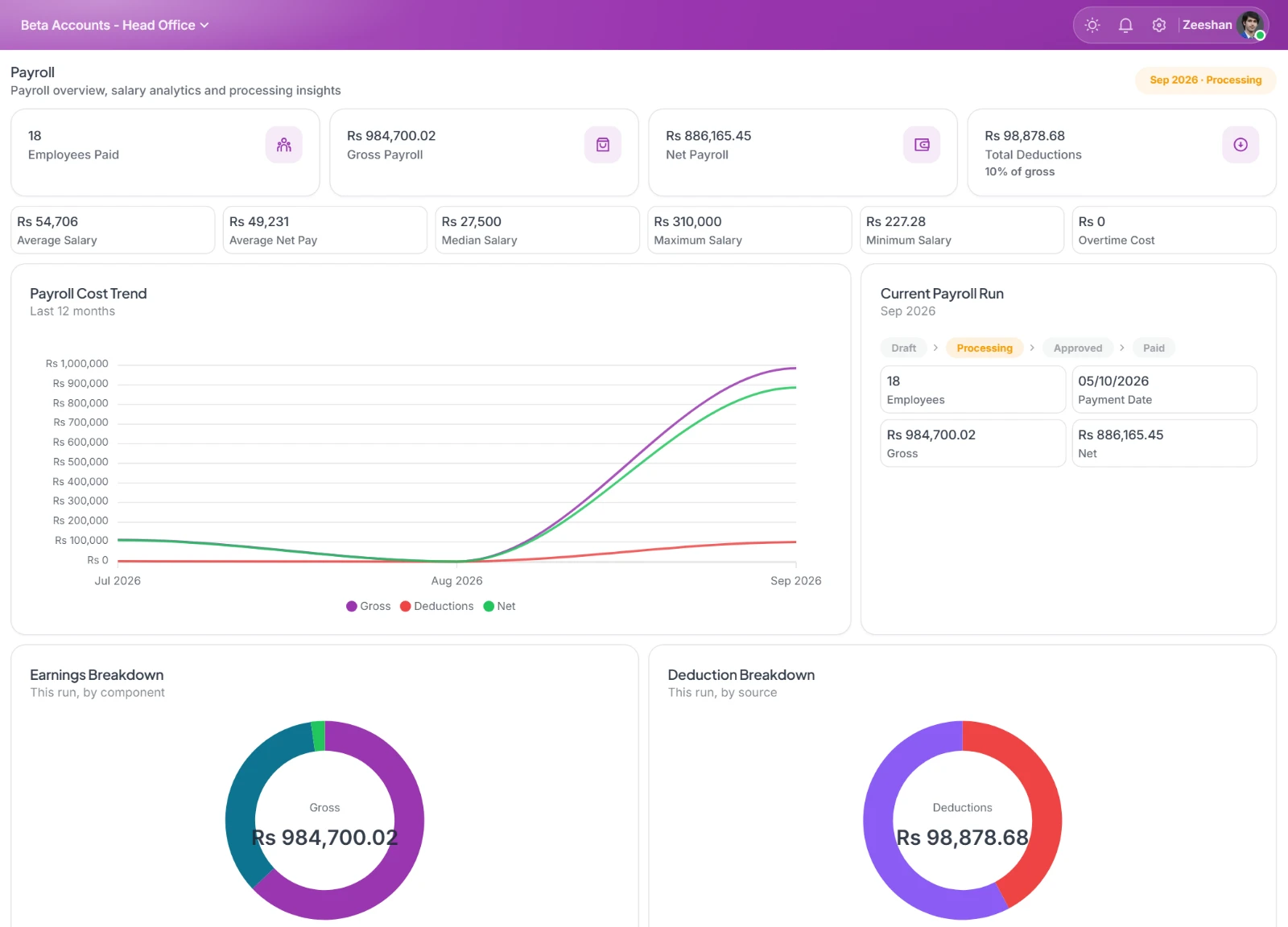
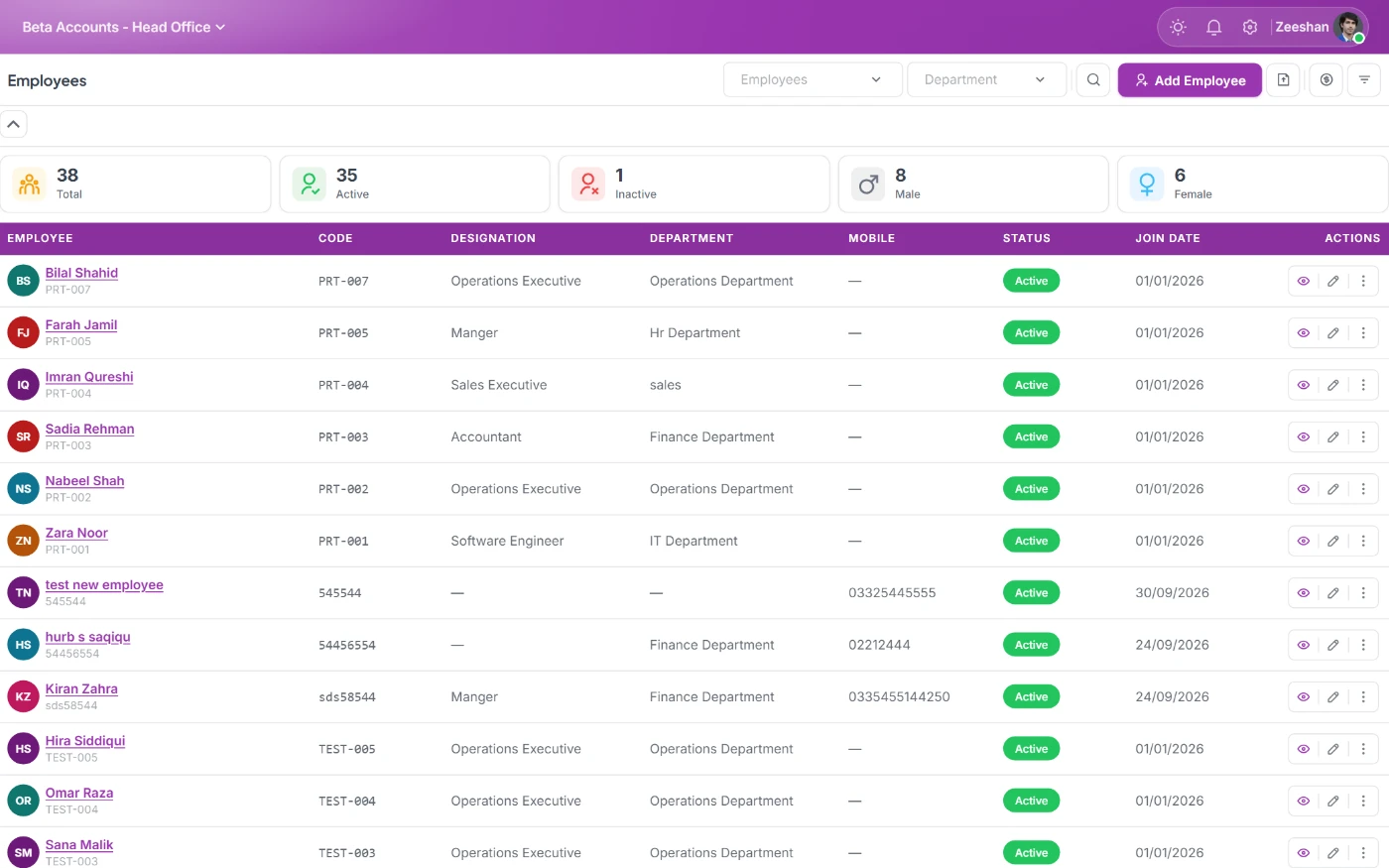
In StreamHCM the employee's provident fund percentage and the employer's percentage are payroll settings, not a hardcoded legal rate. You choose the salary component they apply to, you see the employee share as a deduction and the employer share as a cost, and final settlement can pick up the balance the rules say is payable. When the deed changes the percentage, you change the setting from the effective month. Earlier months stay as they were paid.
The salary deductions calculator lets you model an employee percentage of basic before you write it into the deed. It is a model of the inputs you type. It is not a statement of a statutory provident fund rate, because there isn't one in the provisions cited here. Pair it with the payroll software page if the question is how the pay run itself is produced, and with the guides index for EOBI, tax and gratuity next to it.
About this guide
Checked against the Income Tax Ordinance 2001 text published by FBR, and against the description of standing orders in our gratuity guide, on 24 October 2026. It is general information, not tax or legal advice. Part I of the Sixth Schedule, and any provincial labour code that applies to you, should be read before you set a contribution or tell staff the fund replaces gratuity.
Frequently asked questions
No universal salary percentage was found in the provisions checked for this guide. EOBI is the statutory pension contribution with a set rate. A provident fund exists when the employer establishes one, or when a statute or contract you have checked requires one.
Section 2(48) of the Income Tax Ordinance 2001 defines it as a provident fund recognised by the Commissioner under Part I of the Sixth Schedule. The payslip label does not create recognition.
Section 21(e) disallows a contribution to a fund that is not a recognised provident fund or one of the other approved funds named in that clause. Section 21(f) also requires arrangements to deduct tax under section 149 from taxable payments the fund makes.
The clause, in the FBR text, names approved gratuity, pension and superannuation funds. It does not name provident funds. Do not apply it to a provident fund unless another provision you have read says to.
Under the traditional standing orders, a qualifying provident fund is an alternative to statutory gratuity. A contract can provide both. Read the gratuity guide and the law that applies to your establishment before you stop either payment.
See StreamHCM running your HR
Start a 14-day free trial, no credit card required.