
HR and payroll software for Faisalabad's mills and businesses
Faisalabad is Pakistan's textile city: spinning and weaving mills, power-loom clusters, processing units and garment exporters, along with the traders, transporters and schools that serve them. StreamHCM is built for that workforce, with multi-shift attendance and payroll that can handle hundreds of workers without a week of reconciliation.

Payroll problems in a Faisalabad mill
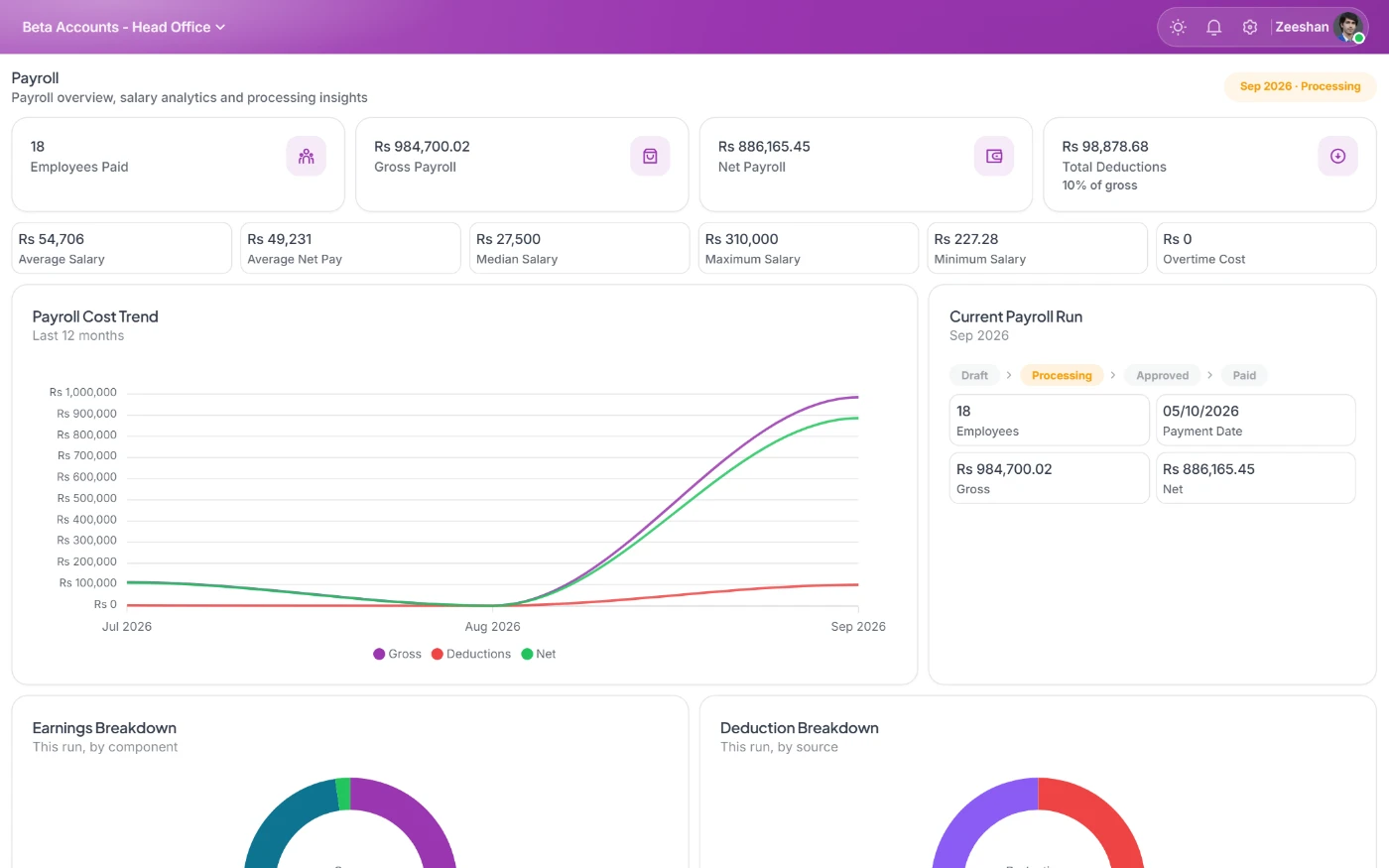
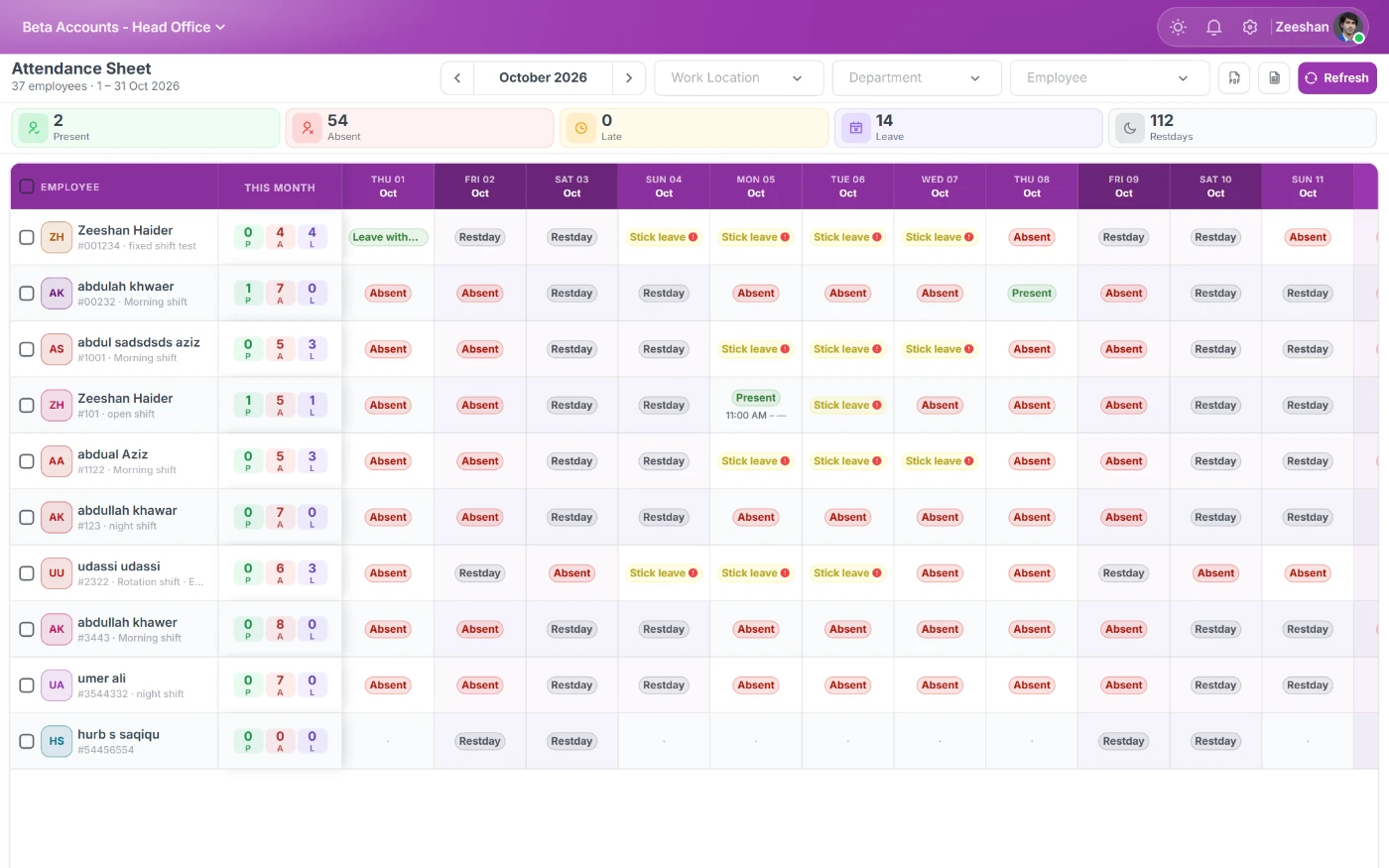
Mill payroll has more moving parts than office payroll. Workers rotate across three shifts, overtime is common during export peaks, some sections pay by piece or by production while others pay a monthly wage, and turnover means new joiners and leavers every week. When attendance comes from a biometric device but payroll lives in Excel, small errors in shift matching turn into disputes on payday.
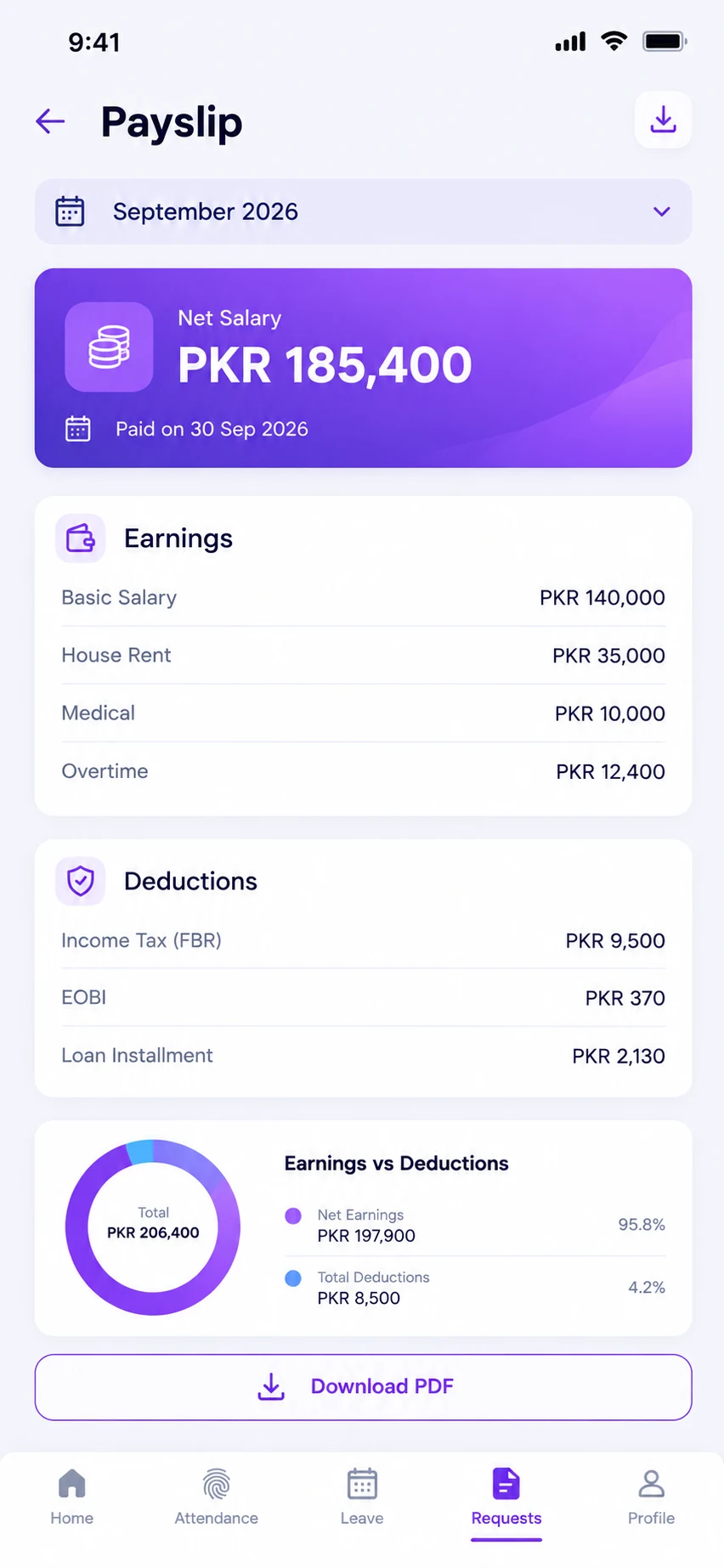
StreamHCM links the two directly. Device punches are matched to the assigned shift, including night shifts that cross midnight, then grace, late and overtime rules are applied before payroll runs. Piece-rate or production earnings can be added per worker as salary components, so total pay can be reviewed against the minimum wage.
Punjab payroll compliance for Faisalabad employers
Companies in Faisalabad fall under Punjab's provincial labour framework, so payroll has three statutory layers to get right every month. The first is EOBI, a federal scheme: the employer pays 5% and the employee 1% of the notified minimum wage, not of actual gross pay. With the federal minimum wage of Rs 40,700 from 1 July 2026, EOBI's own circular puts that at Rs 2,035 employer and Rs 407 employee per insured person, due by the 15th of the following month.
The second is PESSI, the Punjab Employees Social Security Institution. The employer contributes 6% of wages for covered workers and may not recover it from the employee. A Punjab notification of February 2026 fixed the monthly wage ceiling for contribution at Rs 40,000, so the contribution for a covered worker does not rise above that wage base. The third is FBR salary income tax under Section 149, withheld monthly from the annualised salary using the Tax Year 2027 slabs.
Punjab also consolidated many labour statutes into the Punjab Labour Code 2026. Its transition provisions keep earlier notifications, such as the minimum wage of Rs 40,000 a month notified for 2025-26, in force until they are replaced, so HR teams should check the Labour Department's site before each budget cycle. StreamHCM keeps these rates as configurable payroll settings, so a new notification is a settings change rather than a spreadsheet rebuild.
Features Faisalabad employers use most
Shift rosters with rotation, night-shift handling and overtime multipliers per shift.
Bulk onboarding with CNIC-based records, so a new batch of workers can be added in minutes.
Contractor and permanent staff in one system with separate reports.
EOBI and PESSI registers that match the payroll, for inspections and audits.
Payroll finalisation and itemised payslips, ready for salary disbursement through your bank.
Final settlement for leavers, including leave encashment and dues.
Audits and buyer compliance
Export buyers and social compliance auditors usually ask for working-hours records, overtime records and proof of minimum-wage payment. Because StreamHCM keeps attendance, overtime and payroll in one place, those reports come from the same data the workers were paid on.
Every plan includes a 14-day free trial. Our Lahore-based team can help with device setup and shift mapping for Faisalabad units.
Typical Faisalabad HR scenarios
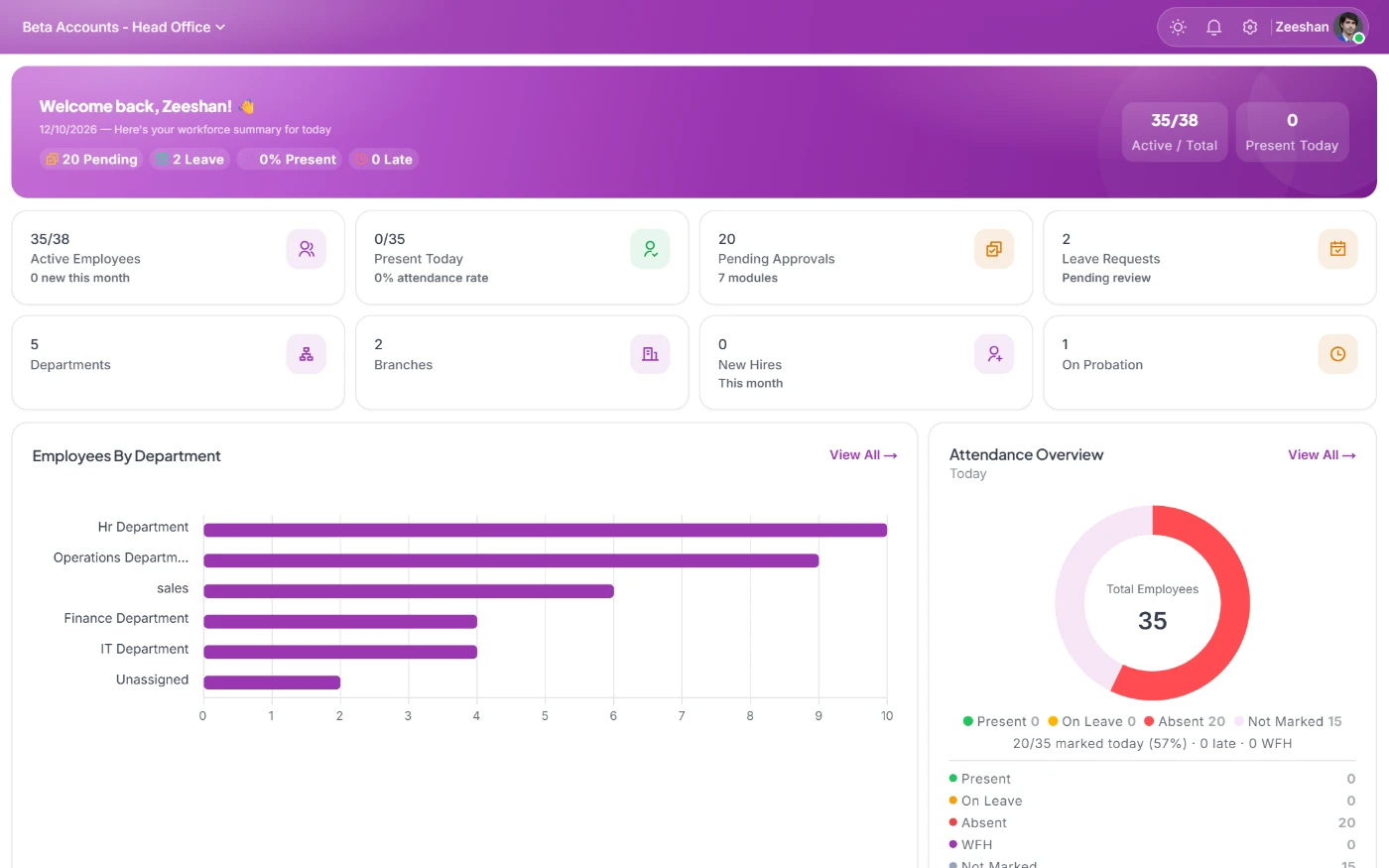
Faisalabad is Pakistan's textile hub, and its HR problems come from scale and shifts. A spinning or weaving mill may run three shifts a day, seven days a week, with hundreds of workers punching in at the same gate in a few minutes. StreamHCM processes punches from multiple devices against each worker's shift, handles night shifts that cross midnight, and applies overtime rules automatically.
Many units employ workers through contractors alongside permanent staff. PESSI's ordinance covers workers employed through another person, and the minimum wage applies to them too, so HR needs a record of contract workers as well as permanent ones. StreamHCM keeps both on the same system with different employment types.
Garment and home textile exporters face social compliance audits from international buyers, who look at working hours, overtime, wages and leave records. Having those records in one system with reports ready makes audit preparation much faster.
Getting started in Faisalabad
Start with one unit or department, connect its attendance devices and run a parallel payroll for one month. When the results match, roll out to the remaining units. Large workforces can be imported in bulk from Excel.
Frequently asked questions
Yes. You can define morning, evening and night shifts, rotate workers across them, and handle night shifts that end the next day.
Production or piece-rate earnings can be added per worker for the period, and payroll combines them with allowances and deductions.
Yes. Attendance, overtime and payroll reports come from the same data, so they are consistent for social compliance audits.
Employees can be imported in bulk from a spreadsheet, and new joiners can be added with their CNIC and shift in a few minutes each.
Our team is in Lahore, about two hours away, and supports Faisalabad customers remotely.
See StreamHCM running your HR
Start a 14-day free trial, no credit card required.