
The contribution rates
EOBI's published rates are 5% of the minimum wage paid by the employer and 1% of the minimum wage paid by the employee, a total of 6% per insured person per month. The key word is minimum wage: the contribution is not a percentage of each employee's actual salary. A manager on Rs 300,000 a month and a helper on the minimum wage cost the employer the same EOBI contribution.
EOBI Circular No. 01/2026-27, dated 20 August 2026, applied the revised minimum wage of Rs 40,700 a month from 1 July 2026. That gives an employer share of Rs 2,035 and an employee share of Rs 407 per insured person per month, Rs 2,442 in total.
- Employer share: 5% of Rs 40,700 = Rs 2,035 per month.
- Employee share: 1% of Rs 40,700 = Rs 407 per month, deducted from salary.
- Total deposited: Rs 2,442 per insured person per month, or Rs 29,304 a year.
Who has to contribute
The Employees' Old-Age Benefits Act 1976 applies to industrial and commercial establishments that meet its coverage conditions, and an employer with five or more employees is generally required to register. Employers below that threshold can register voluntarily, which lets staff start building insurable service earlier. Once covered, the employer is responsible for registering each insured person and paying contributions every month they are employed.
Only the 1% employee share may be deducted from salary. The 5% employer share is the employer's own cost, and deducting it from staff is not allowed.
When contributions are due
Under the EOBI rules, contributions that fall due at the end of a month must be paid no later than the 15th of the following month. July 2026 contributions, for example, are due by 15 August 2026. Contribution amounts are rounded to the nearest rupee. Payment is made through EOBI's online facilitation system and designated banks, so payroll needs to produce the contribution total and employee list in time for the deposit.
Worked example for a 25-person company
A company with 25 insured employees in July 2026 deducts Rs 407 from each salary, Rs 10,175 in total, and adds its own Rs 2,035 per person, Rs 50,875 in total. The deposit for July is Rs 61,050, due by 15 August. The employer's Rs 50,875 is a payroll cost on top of gross salaries; the employees' Rs 10,175 is a deduction that reduces their net pay.
If the minimum wage base changes partway through a year, as it did when the July 2026 rate was notified in August, contributions for the months already paid at the old rate may need an adjustment. Payroll software that keeps rates as settings makes that adjustment visible instead of hiding it in a spreadsheet formula.
How EOBI should appear on the payslip
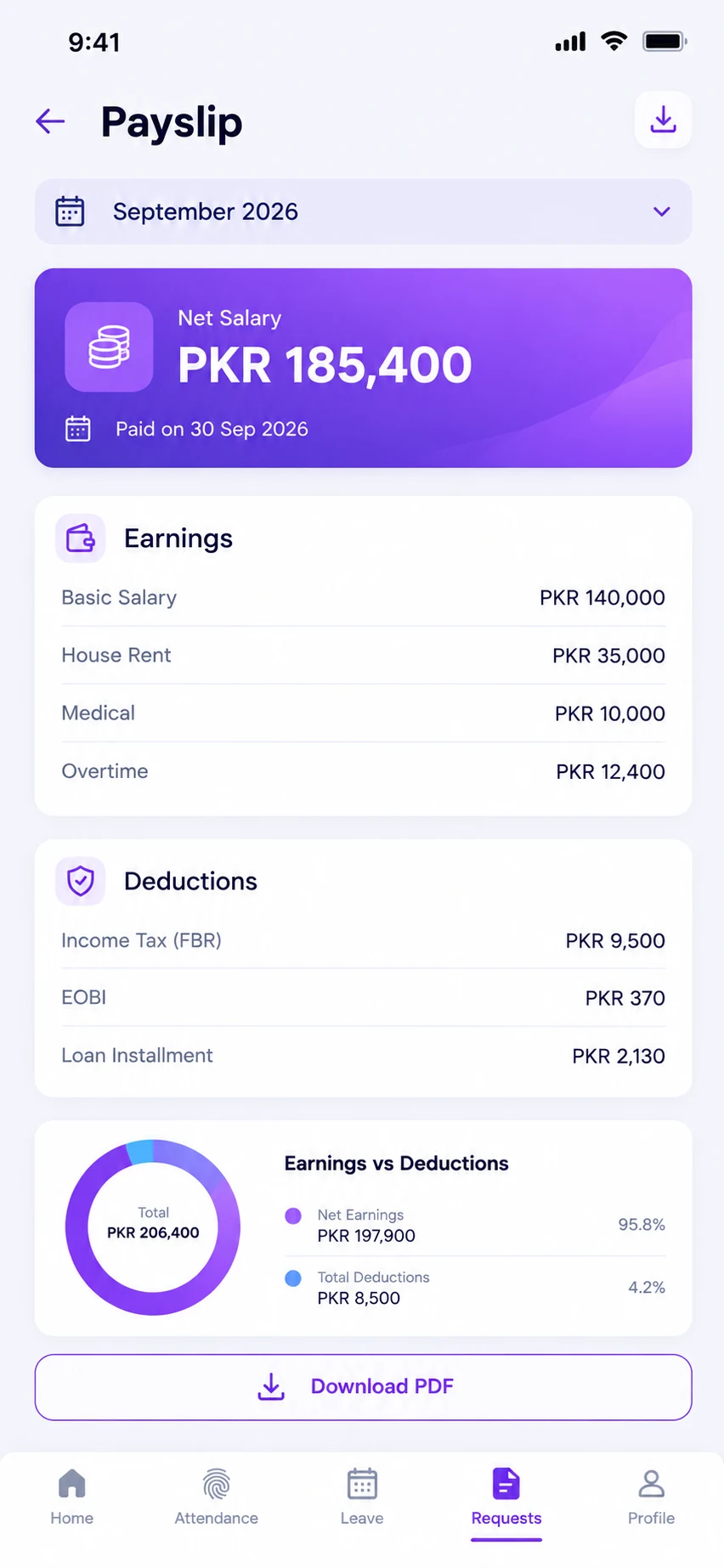
The employee's 1% belongs in the deductions section of the payslip, next to income tax and provident fund. The employer's 5% does not reduce net pay, but it should appear on the payroll register and in cost reports so finance sees the full cost of each employee. Showing both clearly helps employees check that their pension contributions are being paid.
Common mistakes
- Calculating EOBI as a percentage of gross salary instead of the notified minimum wage base.
- Deducting the employer's 5% from the employee.
- Forgetting to update the base after a new minimum wage is notified.
- Missing the 15th-of-the-month deadline because payroll closes late.
- Not registering new joiners, so their service is not recorded.
How StreamHCM handles EOBI
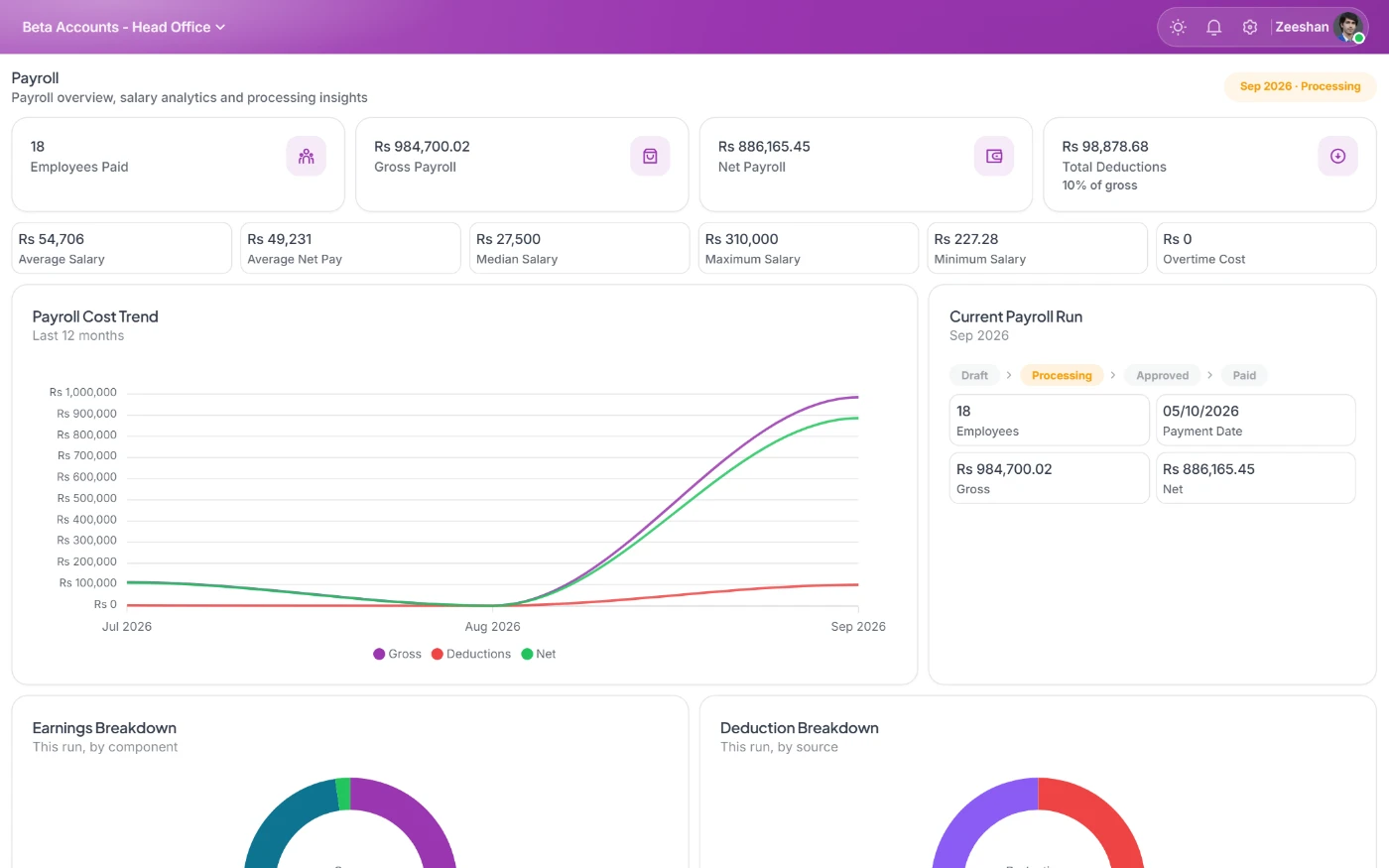
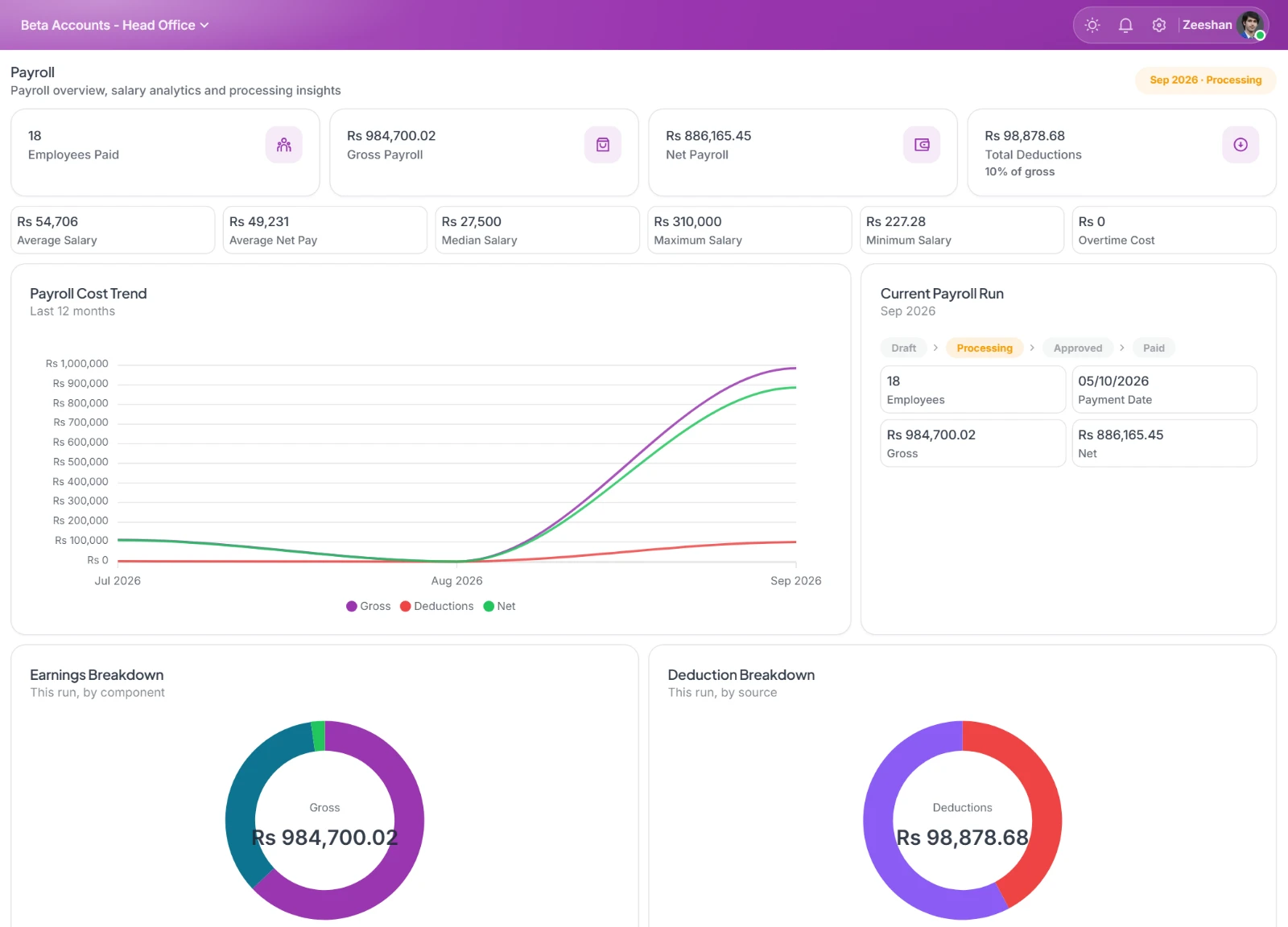
StreamHCM calculates EOBI automatically: it works out both shares for every insured employee, shows the employee share on the payslip and the employer share on the register, and produces a monthly EOBI summary for deposit. When a new circular is issued, you update the setting once and every payroll after its effective date uses it.
About this guide
This guide is general information, checked against the sources listed below on 24 October 2026. It is not legal or tax advice; confirm current notifications with the relevant authority or your adviser before acting.