
The legal basis and the rate
PESSI was established under the Provincial Employees Social Security Ordinance 1965 and works under the Punjab Labour and Human Resource Department. PESSI's own overview states that the ordinance requires employers to contribute 6% of the wages of their employees.
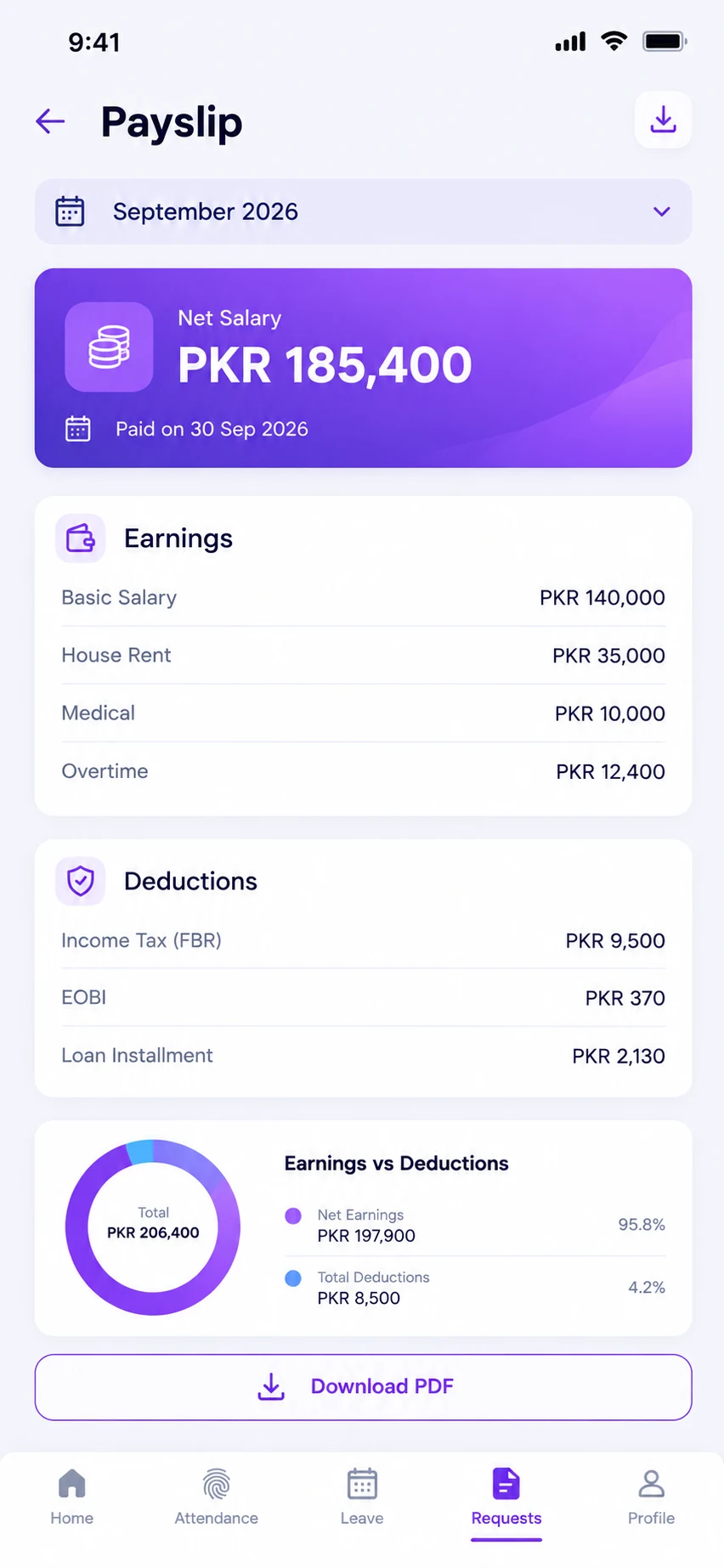
Unlike EOBI, PESSI is an employer-only contribution in the standard scheme: the employer may not deduct its contribution from the employee's wages or recover any part of it, even by agreement. Under the self-assessment scheme there is a small fixed employee share; check the current terms with PESSI if you opt for it.
The February 2026 wage ceiling
In February 2026 the Punjab government gazette-notified a monthly wage ceiling for contribution purposes equal to the minimum wage of Rs 40,000, under sections 2(8)(f) and 20 of the 1965 ordinance, as reported by Dawn. Before this, practitioners applied a ceiling linked to the minimum wage plus a margin. In practice the change means the contribution for a covered worker is calculated on wages up to Rs 40,000, so it does not exceed Rs 2,400 a month at the 6% rate.
PESSI's commissioner was reported as saying that workers already covered stay covered even if their pay rises above the ceiling. Treat coverage of higher-paid existing workers carefully and confirm your position with PESSI rather than simply dropping them from the return.
Who is covered
PESSI applies to establishments and classes of workers that the Punjab government has notified, and coverage is linked to wage limits. Establishments with five or more covered workers are generally required to register. The scheme covers workers employed directly and through contractors, so labour supplied by a contractor does not automatically fall outside it.
Due dates and late payment
Practitioner guides summarising PESSI rules describe the contribution as payable within one month of falling due, for example July contributions by the end of August, with an increase charged for late payment. Check the exact deadline and surcharge with PESSI, because late payment adds cost and non-payment is a prosecutable offence.
Worked example
A Faisalabad unit has 60 covered workers, all paid at or above Rs 40,000 a month. At 6% on the Rs 40,000 ceiling, the contribution is Rs 2,400 per worker, Rs 144,000 for the month. None of it is deducted from wages. The same workers also have EOBI deducted at Rs 407 each with the employer paying Rs 2,035 each, and FBR salary tax where their annual income exceeds the taxable threshold.
PESSI versus EOBI
- EOBI is federal and pays old-age, invalidity and survivors' pensions; PESSI is provincial and provides medical care and cash benefits.
- EOBI has an employee share of 1%; standard PESSI contributions are paid entirely by the employer.
- EOBI is calculated on the federal minimum wage base; PESSI is 6% of wages up to the Punjab ceiling.
- Most covered Punjab employers pay both.
Setting up PESSI in StreamHCM
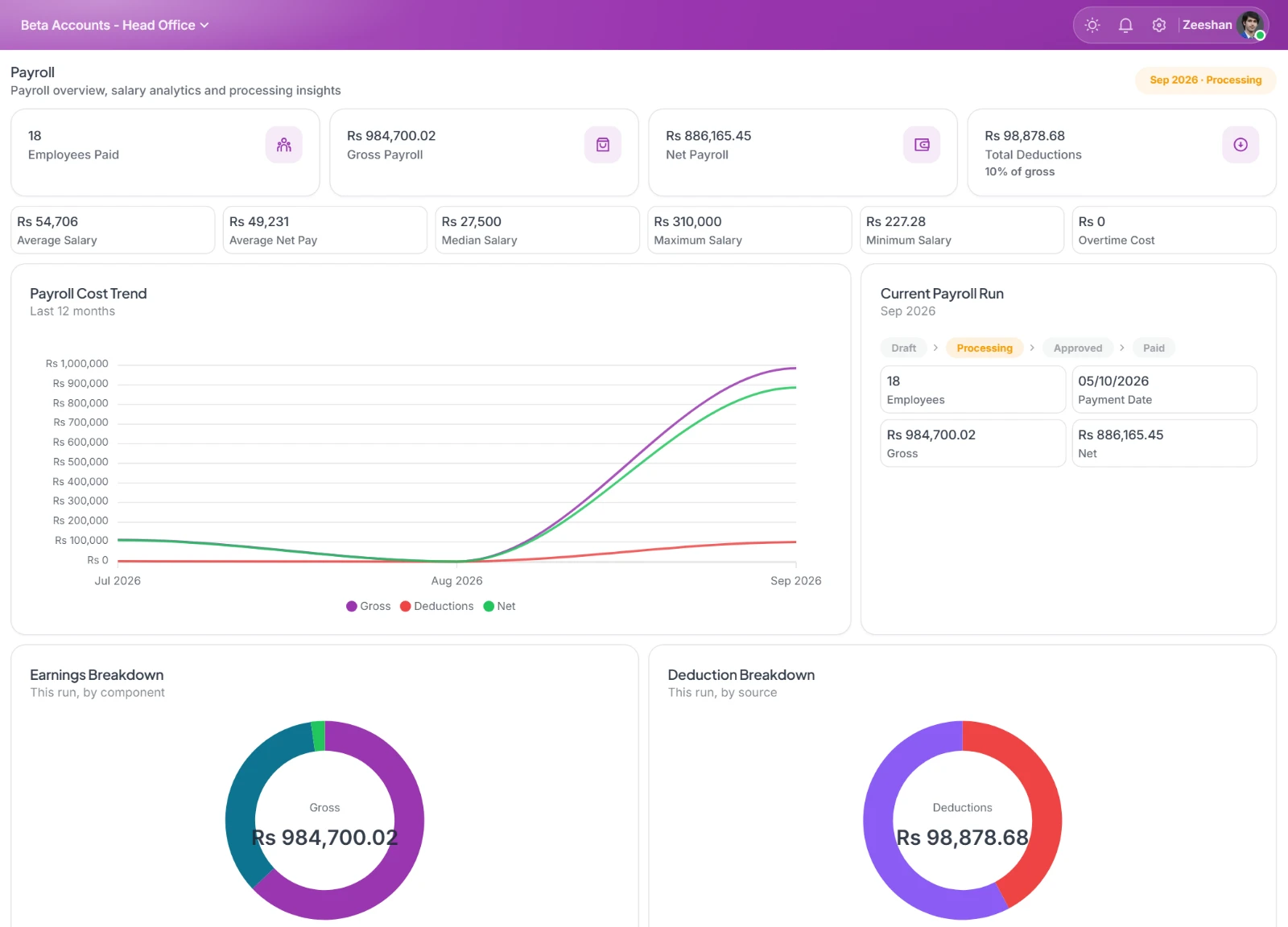
In StreamHCM, PESSI is a branch-level employer contribution with a rate and wage ceiling. Employees at Punjab branches who are covered get the contribution calculated automatically, it appears on the payroll register as an employer cost rather than a payslip deduction, and a monthly summary is available for the return. If the ceiling or rate changes, update the setting with its effective date.
Checklist for Punjab employers
Before each payroll, confirm the current PESSI rate and wage ceiling, check which branches are in Punjab, and confirm that newly hired workers in covered establishments are registered. After payroll, reconcile the contribution total to the number of covered workers, deposit on time, and keep the challan with the payroll register for audit. When PESSI inspectors visit, they typically ask for wage records, attendance registers and proof of payment.
About this guide
This guide is general information, checked against the sources listed below on 24 October 2026. It is not legal or tax advice; confirm current notifications with the relevant authority or your adviser before acting.