
The law and the rate
Section 20 of the Sindh Employees' Social Security Act 2016 requires the employer to pay a contribution at the rate of six per cent for every employee, whether employed directly or through any other person, subject to wage limits set by the government under section 75. The employer cannot deduct its contribution from the employee's wages or recover it from them, notwithstanding any agreement.
The Act also makes building owners guarantee contributions for construction work done by contractors, and requires public authorities to see proof of contributions before settling contractors' final bills. Contract labour is therefore firmly within the scheme.
Wage limits and skill categories
SESSI links contributions to minimum wages notified under the Sindh Minimum Wages Act 2015. A SESSI notification of August 2025, effective 1 July 2025, set lower and upper wage limits for unskilled, semi-skilled, skilled and highly skilled workers, with the upper limit Rs 5,000 above the lower limit. For unskilled workers that gave a lower limit of Rs 40,000 and a contribution of Rs 2,400 at 6%.
Sindh then notified a minimum wage of Rs 43,000 a month for unskilled workers from 1 July 2026. SESSI wage limits usually follow minimum wage changes, so check SESSI's latest notification for the 2026-27 limits before running July payroll and any arrears.
The self-assessment scheme
Section 21 of the Act lets employers opt for a self-assessment scheme. Under it, the employer pays 6% of the wage limit per month per secured employee, and each secured employee pays Rs 40 a month through the employer. SESSI's guidance says employers in the scheme are exempted from annual verification of records for two years. For many employers that predictability is worth more than the small difference in cost.
Due dates and late payment
SESSI's published procedure says the contribution of the current month is payable by the end of the following month, and that late payment attracts an increase of half a per cent per day up to a maximum of 50% of the principal under section 24(1). Building the deposit into your payroll calendar avoids these charges.
Multi-province employers
A Karachi head office with branches in Lahore or Islamabad will pay SESSI for covered Sindh staff, PESSI for covered Punjab staff and EOBI for everyone insured. Applying one province's rule to every employee is a common error. Payroll should decide the scheme by the employee's place of work.
Setting up SESSI in StreamHCM
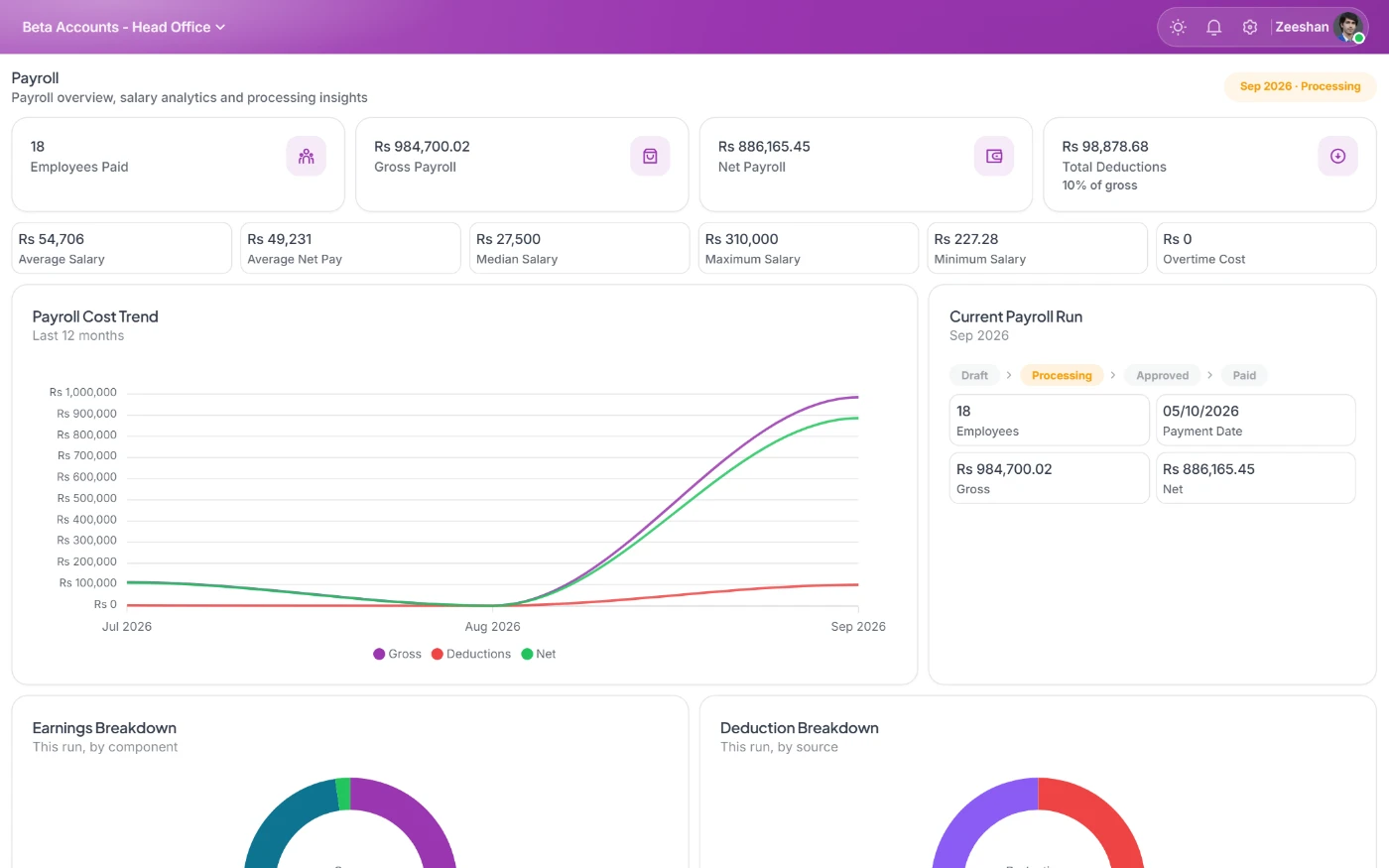
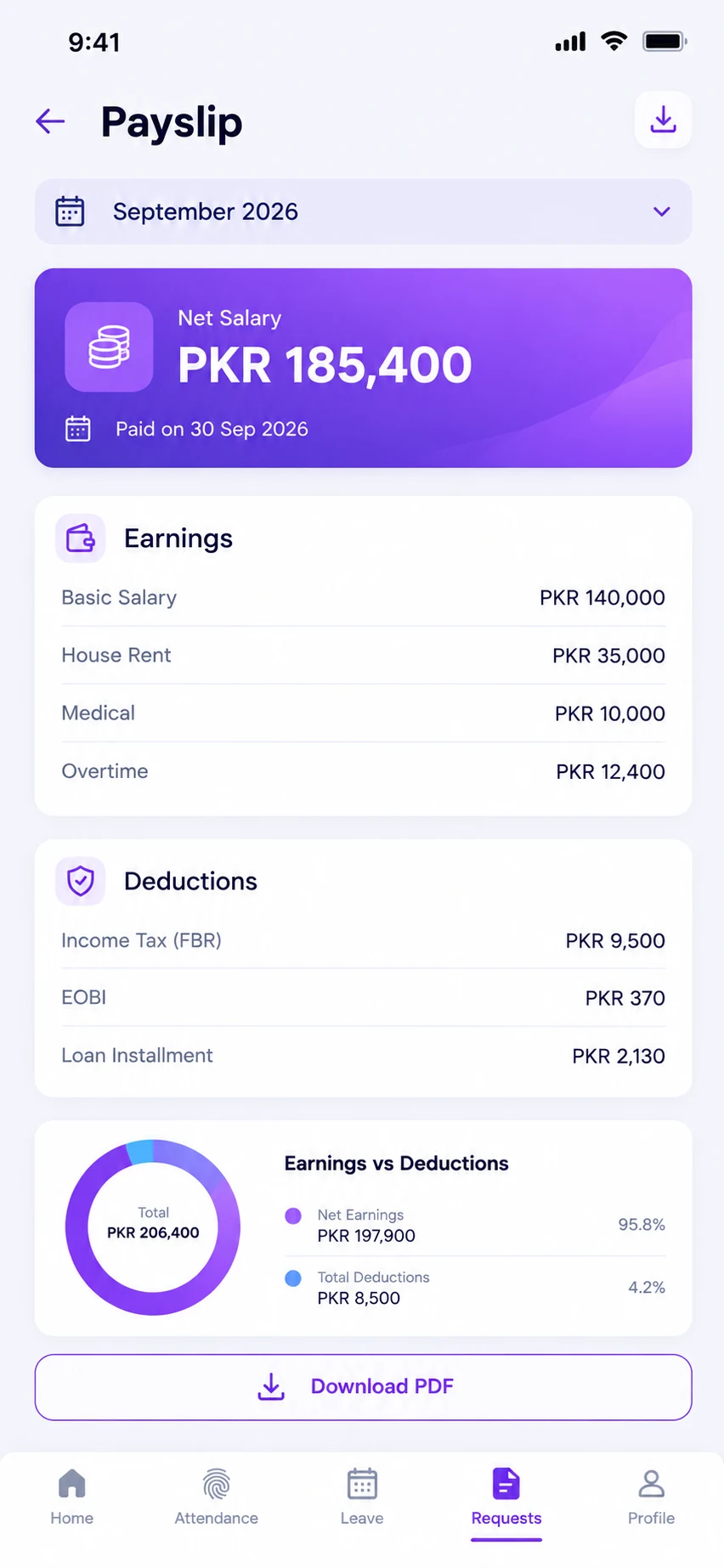
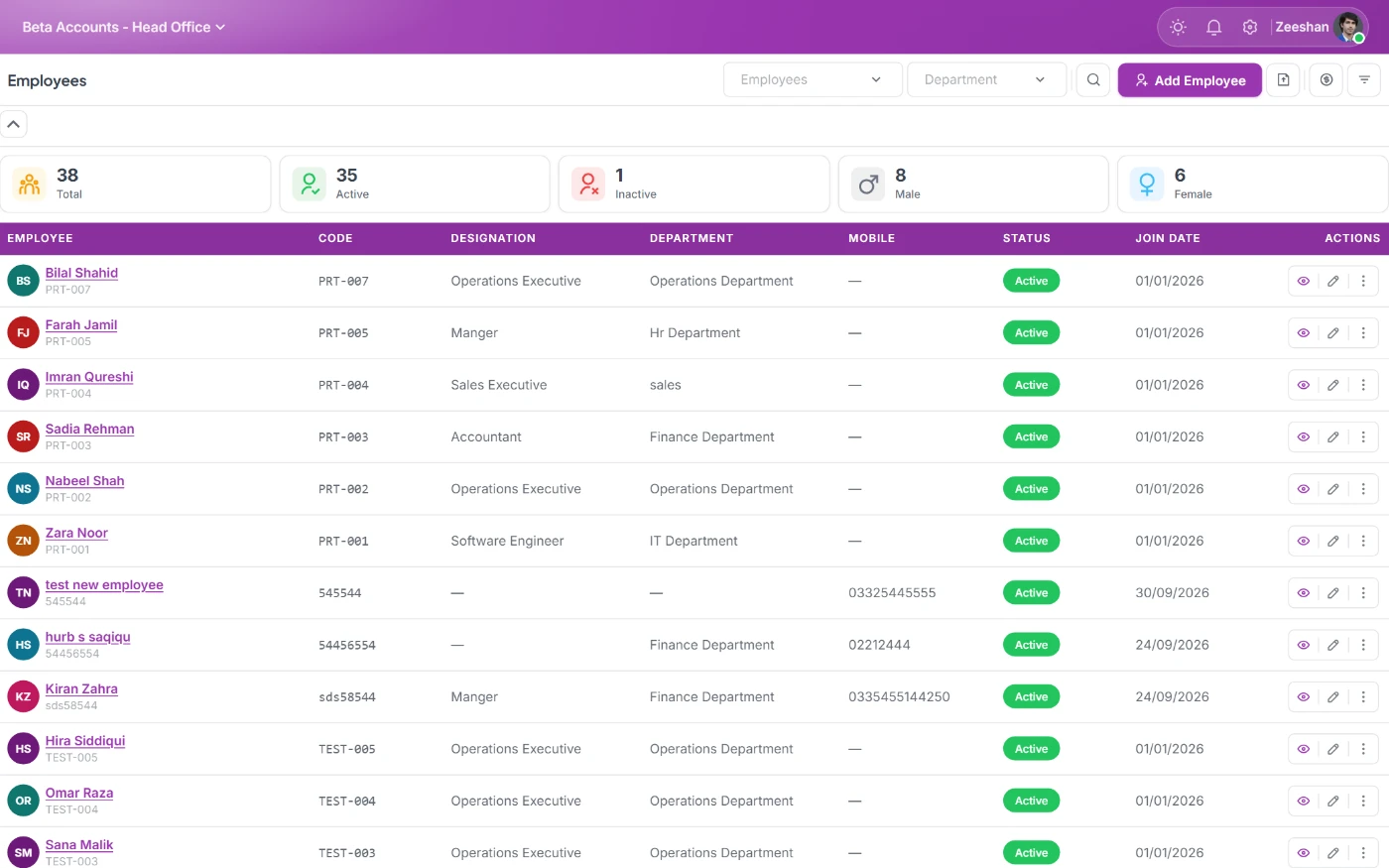
In StreamHCM, SESSI is a contribution attached to your Sindh branches, with the rate, wage limits per skill category and the self-assessment employee share as settings. Covered employees get the contribution calculated automatically, the employer share is reported as a cost and the Rs 40 employee share, where applicable, appears as a payslip deduction.
- Branch-level scheme selection: SESSI for Sindh, PESSI for Punjab.
- Skill category per employee for wage limits.
- Rates updated when notifications change, with arrears handled in payroll.
- Monthly contribution summary for deposit.
Checklist for Sindh employers
Before July payroll, check whether SESSI has issued new wage limits following the Sindh minimum wage notification. For every new hire at a Sindh branch, record their skill category, since wage limits differ by category. After payroll, reconcile the contribution to covered headcount, deposit before the deadline and file the challan with the payroll register. If you are in the self-assessment scheme, keep the Rs 40 employee deductions visible on payslips.
Keep the SESSI registration numbers of each establishment and the secured persons' details up to date, since inspectors and the benefit process rely on them.
About this guide
This guide is general information, checked against the sources listed below on 24 October 2026. It is not legal or tax advice; confirm current notifications with the relevant authority or your adviser before acting.