
HR and payroll software for Gujranwala manufacturers
Gujranwala's employers are makers. Ceramics and sanitary ware, metalware and light engineering, fans and electrical goods, and textile units sit beside the trading houses that grew up with them. StreamHCM is HR and payroll software for those workshops and factories: shift attendance, piece-rate and overtime pay, and Punjab's PESSI rules next to federal EOBI.

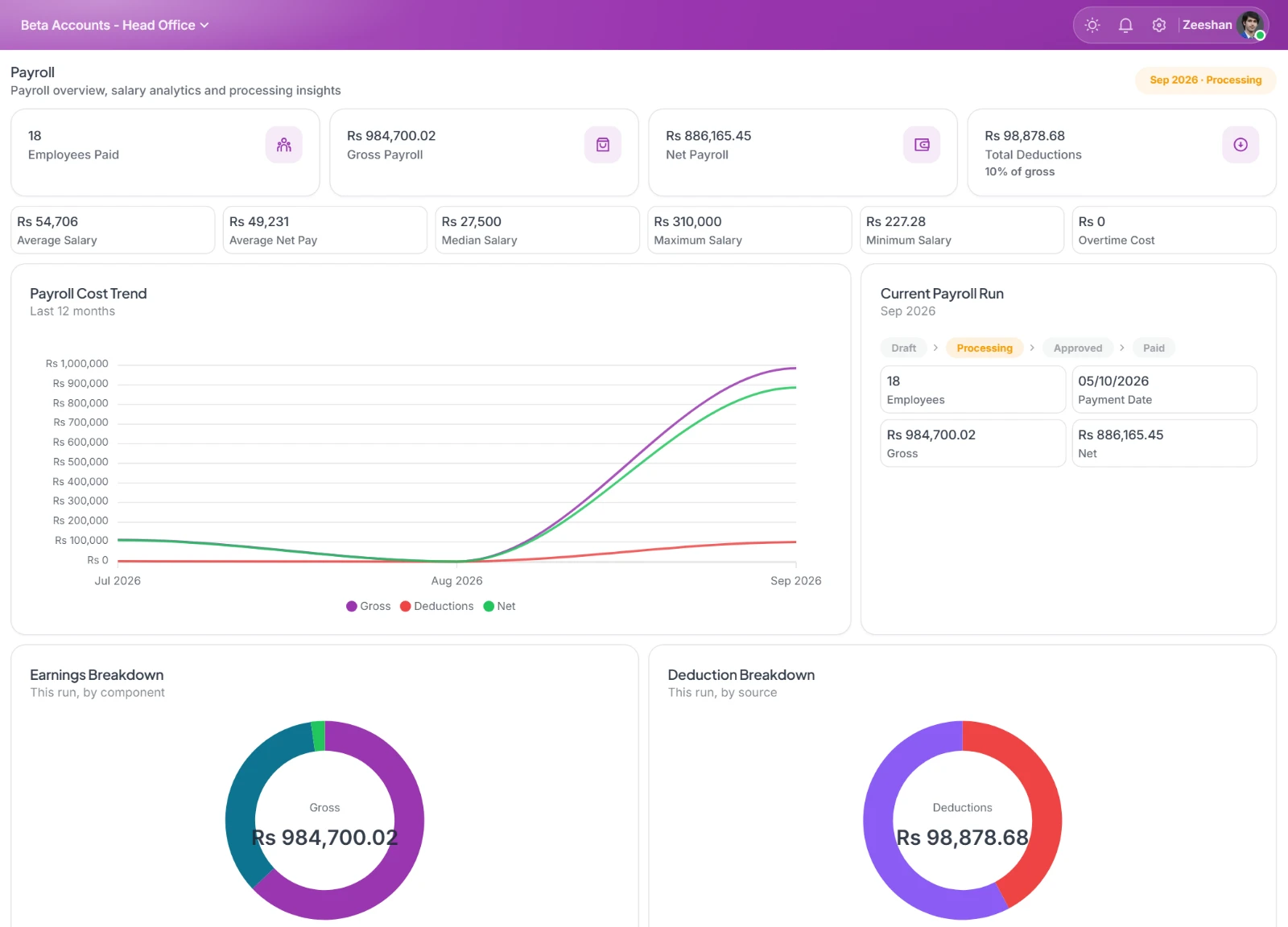
Workshops that outgrew the register
A typical Gujranwala manufacturer did not start as a large plant. It started as a workshop, added a shed, then added a second shift when orders picked up. The attendance method often stayed a register or one fingerprint device at the gate, and the wages stayed in a sheet the owner or a single accountant maintains. That holds while everyone works the same hours and the same rate. It breaks when ceramics kilns, metal presses and a packing line run different shifts, or when a busy month adds overtime that nobody approved in advance.
Export and domestic buyers of fans, utensils, sanitary ware and fabric also ask, more often than they used to, for hours and wages that match. A register, a piece-rate notebook and a payroll sheet are three sources. An auditor, a buyer or a labour inspector will notice when they disagree. StreamHCM keeps one record per worker: the punch, the approved overtime, and the pay calculated from those hours.
Gujranwala is also part of a manufacturing belt. Owners compare notes with units in Sialkot and Faisalabad, and some groups already have a unit in more than one of those cities. The HR system has to treat Gujranwala as its own branch, not as a tab in someone else's workbook. HR software Pakistan is the country page. This one is the Gujranwala factory version.
Punjab payroll: PESSI and EOBI
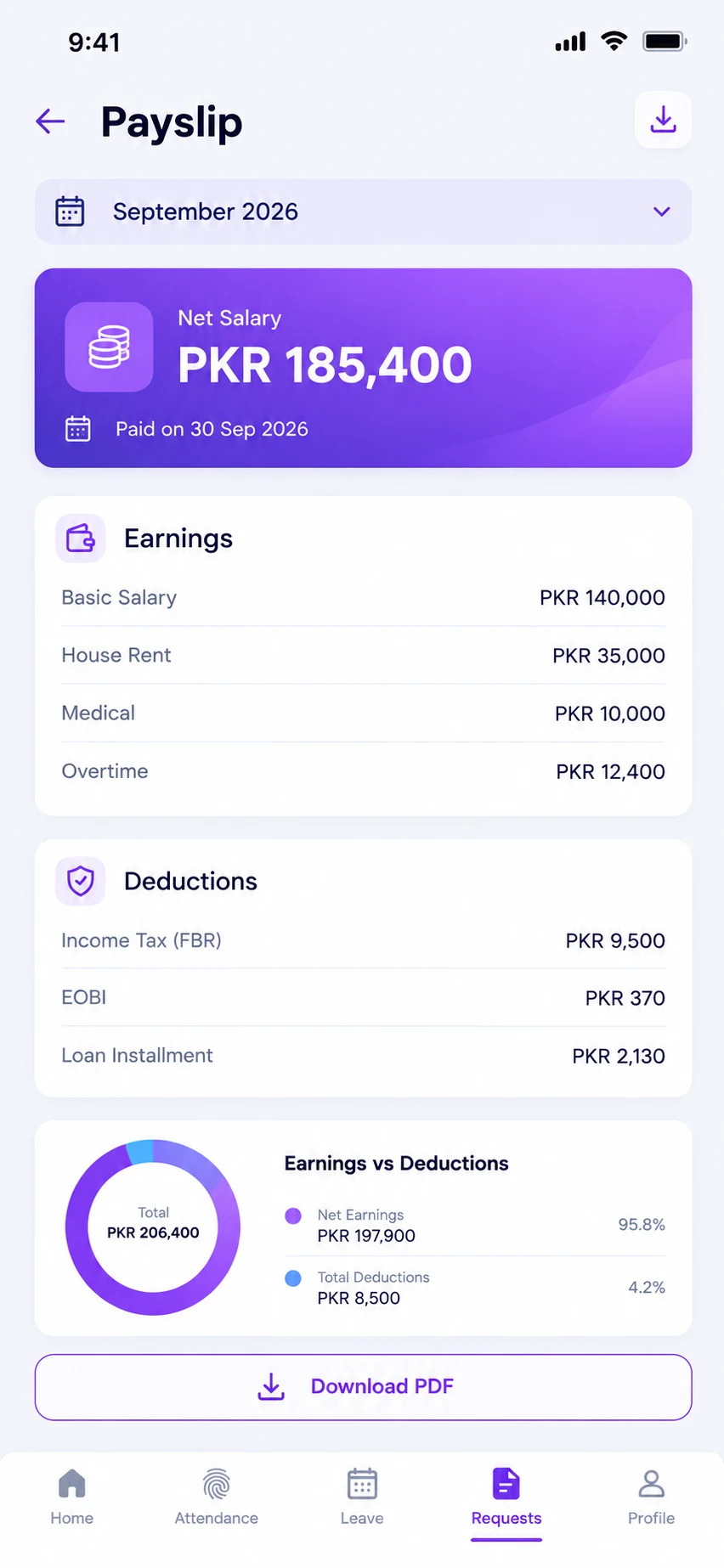
Gujranwala is in Punjab, so covered employers deal with PESSI, the Punjab Employees Social Security Institution, not with SESSI. The employer contributes 6% of wages for covered workers and may not recover that contribution from the employee. A Punjab notification of February 2026 fixed the monthly wage ceiling for contribution at Rs 40,000, so the contribution for a covered worker does not rise above that wage base. Six percent of that ceiling is Rs 2,400, which is the cap already stated on our PESSI contribution guide. StreamHCM stores the rate and the ceiling as payroll settings.
EOBI is federal and applies beside PESSI. The employer pays 5% and the employee 1% of the notified minimum wage, not of actual gross pay. With the federal minimum wage of Rs 40,700 from 1 July 2026, EOBI's circular puts the amounts at Rs 2,035 employer and Rs 407 employee per insured person, due by the 15th of the following month. See the EOBI contribution guide. FBR salary income tax under Section 149 is withheld monthly from the annualised salary using the Tax Year 2027 slabs.
Punjab consolidated many labour statutes into the Punjab Labour Code 2026. Its transition provisions keep earlier notifications, including the minimum wage of Rs 40,000 a month notified for 2025-26, in force until they are replaced. Check the Punjab Labour Department before each wage change. StreamHCM does not hard-code a private rate. You set the minimum-wage check, the PESSI ceiling and the EOBI base, and a new notification is an update to those settings. A group with a Gujranwala factory and a Sindh branch attaches PESSI to Gujranwala and SESSI to Sindh, in one payroll run.
What Gujranwala factories use first
The modules that matter on a Gujranwala gate are the ones that connect the punch to the wage.
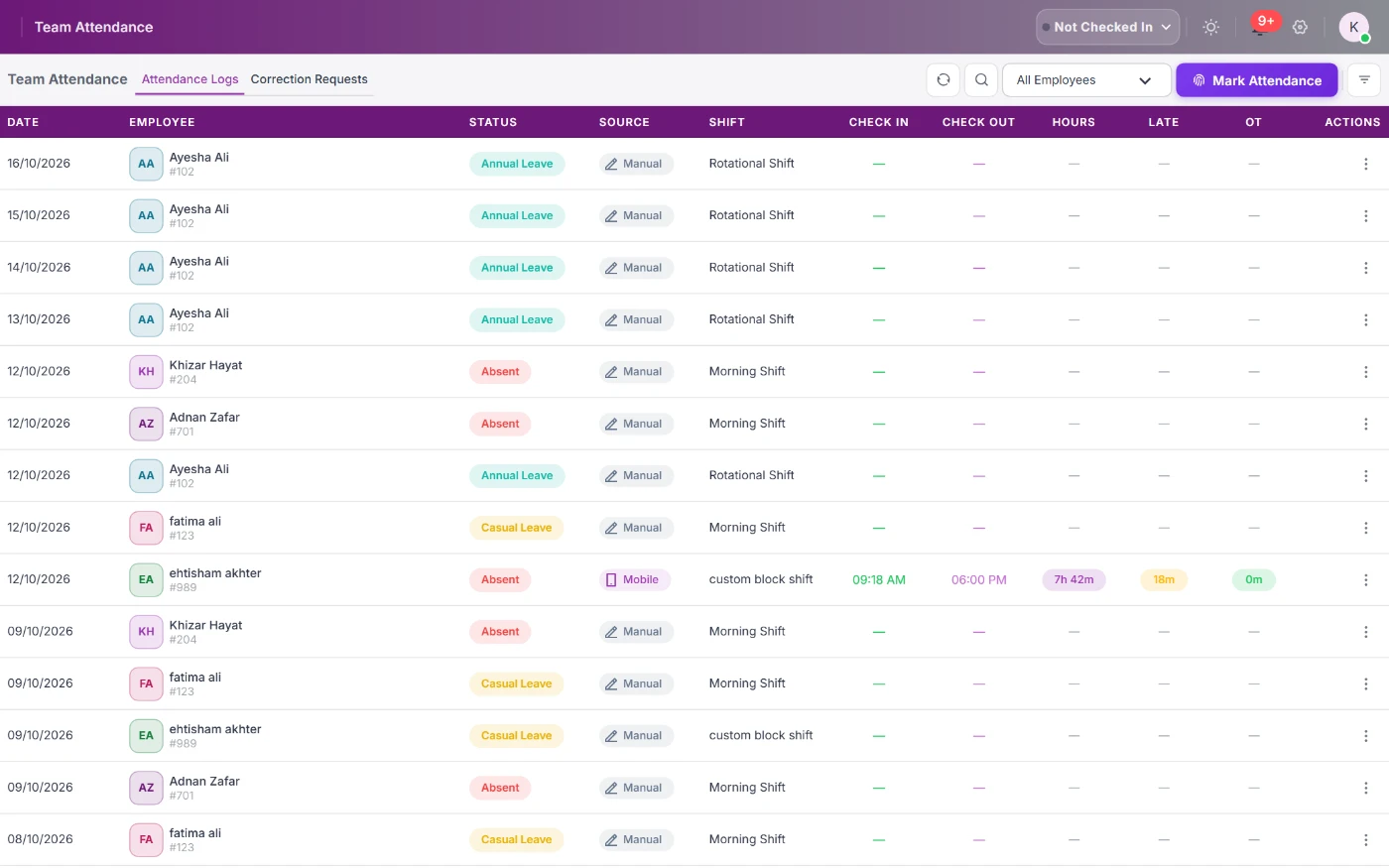
Fingerprint and face attendance on a busy gate, with punches matched to the worker's shift rather than typed into a sheet at night.
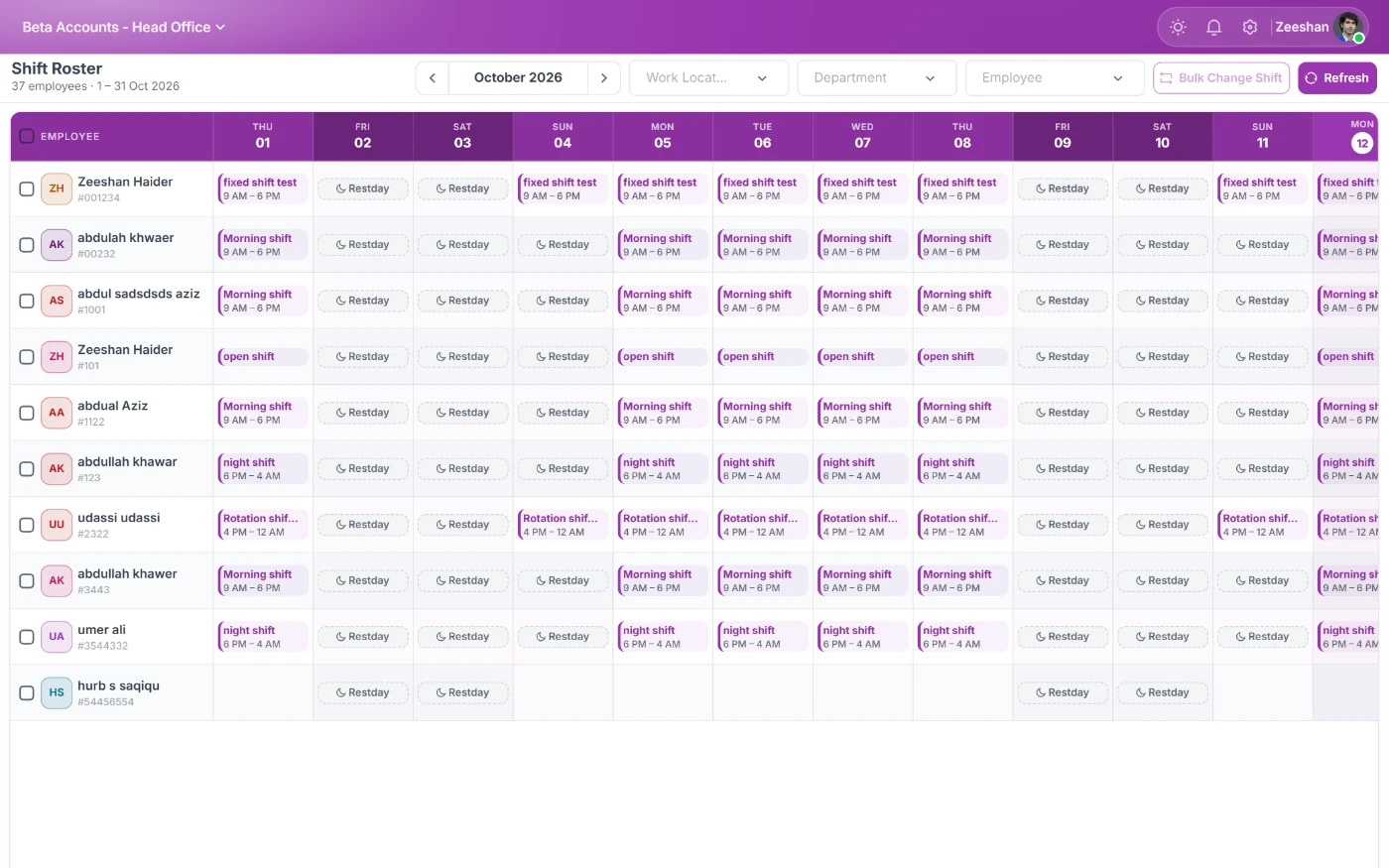
Morning, evening and night shifts, including shifts that cross midnight, grace minutes, and overtime that a supervisor approves before payroll.
Piece-rate or production amounts for the period, added as salary components beside time-based pay, so total pay can be reviewed against the minimum wage.
Permanent staff and contractor workers in one system, with separate reports for each.
PESSI as an employer cost, EOBI, and FBR Section 149 tax, then itemised payslips in the employee app.
Final settlement when a worker leaves, using the same attendance the wages were paid from.
Ceramics, metalware and textiles
Ceramics and sanitary-ware units plan work around kilns, casting and packing. Those steps do not share one timetable. A kiln shift and a packing shift need different start times, and a hot month of orders adds overtime that should be visible before the wage is paid. Metalware and light engineering, including utensils and the electrical goods Gujranwala is known for, often mix daily-rated and monthly-rated workers, and sometimes pay part of the output by the piece. Textile units in the district add the same pressure Faisalabad mills already know: three shifts, a crowded gate, and a buyer who may ask for hours and wages together.
StreamHCM does not replace the production system that counts pieces on the line. It gives payroll a place to receive the approved quantities and rates for the period, and to put them on the same payslip as attendance-based overtime. Manufacturing HR software and textile HR software describe the factory patterns. Overtime rules explain why a factory and a shop do not share one formula, and why the rule should sit on the branch. The overtime calculator is a model you can compare with your own divisor. It is not a figure from the statute.
SMEs with a second unit
A large share of Gujranwala employment is in manufacturing SMEs, not in a single giant mill. The owner is often still close to the gate, and the first HR hire is recent. The software has to be something that person can run: add a joiner with a CNIC, assign a shift, approve overtime from a phone, and close the month without rebuilding a workbook. HR software for SMEs is written for that team. Small-business payroll is the payroll slice.
When the same owner opens a second shed, or a unit closer to Sialkot or Lahore, the second site should be a branch. Its device, its shifts and its holiday calendar stay local. Head office still sees one payroll. Reports by branch show whether the new unit's overtime is the thing that moved the wage bill. That is a more useful conversation than discovering the gap when the bank file is already late.
Getting started in Gujranwala
StreamHCM does not keep an office in Gujranwala. The team works from Lahore, about an hour and a half away by road, at 68 MB, Zainab Tower, Model Town, Link Road, and supports Gujranwala customers remotely. Onboarding is the same remote setup used for other Punjab cities: import workers from Excel, connect the attendance device, map the shifts, and run a parallel payroll.
The 14-day free trial is the right length for one unit. Compare StreamHCM's draft with your current sheet, including PESSI, EOBI and any piece-rate amounts, before you move the next unit. No card is taken on this site. Start from the contact page. Plans in PKR are on pricing. If the buyer's auditor is the reason you are looking, begin with one month of attendance and payroll from the same record, and keep the payslips. That is the trail the Sialkot exporters' page describes, and it applies to a Gujranwala factory for the same reason.
Frequently asked questions
Gujranwala is in Punjab, so PESSI applies to covered establishments, along with EOBI and FBR salary tax. SESSI is the Sindh scheme and is not the one to put on a Gujranwala branch.
Yes. Production or piece-rate amounts for the period can be added as salary components, beside time-based pay, allowances and deductions. You can review total pay against the minimum wage you have configured.
Yes. You define the shifts, including a night shift that ends the next morning, and attendance is matched to that shift. Overtime can be held for approval before it reaches payroll.
A Punjab notification of February 2026 fixed the monthly wage ceiling for contribution at Rs 40,000. The PESSI guide on this site states the resulting cap at Rs 2,400 a month. Confirm any later notification with PESSI before you change the setting.
Yes. Request a 14-day trial on the contact form. No card is taken on this site. Our Lahore team supports setup remotely.
Sources
- EOBI: contribution rates (eobi.gov.pk)
- FBR Withholding Tax Rate Card, Tax Year 2027 (Section 149)download1.fbr.gov.pk
- PESSI overview: 6% employer contribution (pessi.punjab.gov.pk)
- Punjab Labour Department: minimum wage notifications
See StreamHCM running your HR
Request a 14-day trial. No card is taken on this site.