
HR and payroll software for employers in Quetta
Quetta is the capital of Balochistan: provincial offices, the University of Balochistan and BUITEMS, hospitals including Bolan Medical College, and the trading houses, mines and wholesalers that keep the city working. StreamHCM gives those employers one cloud system for attendance, leave and payroll, with Balochistan's BESSI rules and federal EOBI on the same payslip.

Why a Quetta register stops being enough
Quetta's employers do not look like a Punjab industrial estate. The provincial secretariat and the departments around it employ large office teams. The University of Balochistan and BUITEMS run academic calendars beside admin, laboratory and support staff. Bolan Medical College and the hospitals and clinics around the city staff wards that do not close at five. Mining and minerals companies, and the contractors who move people and material for them, keep crews that are not all inside one compound. Trading houses tied to the Chaman corridor, fruit and agriculture wholesalers, construction firms and private schools and colleges close the same month.
A lot of those organisations still do it from a register, one fingerprint device and a workbook that one person in accounts understands. That holds while everyone is in one building and on one set of hours. It starts to fail when a hospital adds a night duty, a contractor posts people to a site outside the city, or a trading house has to show a Karachi head office which days the Quetta staff actually worked. The Quetta file uses one set of columns. The head-office file uses another. By the time both are merged, the new joiners and the overtime have already drifted.
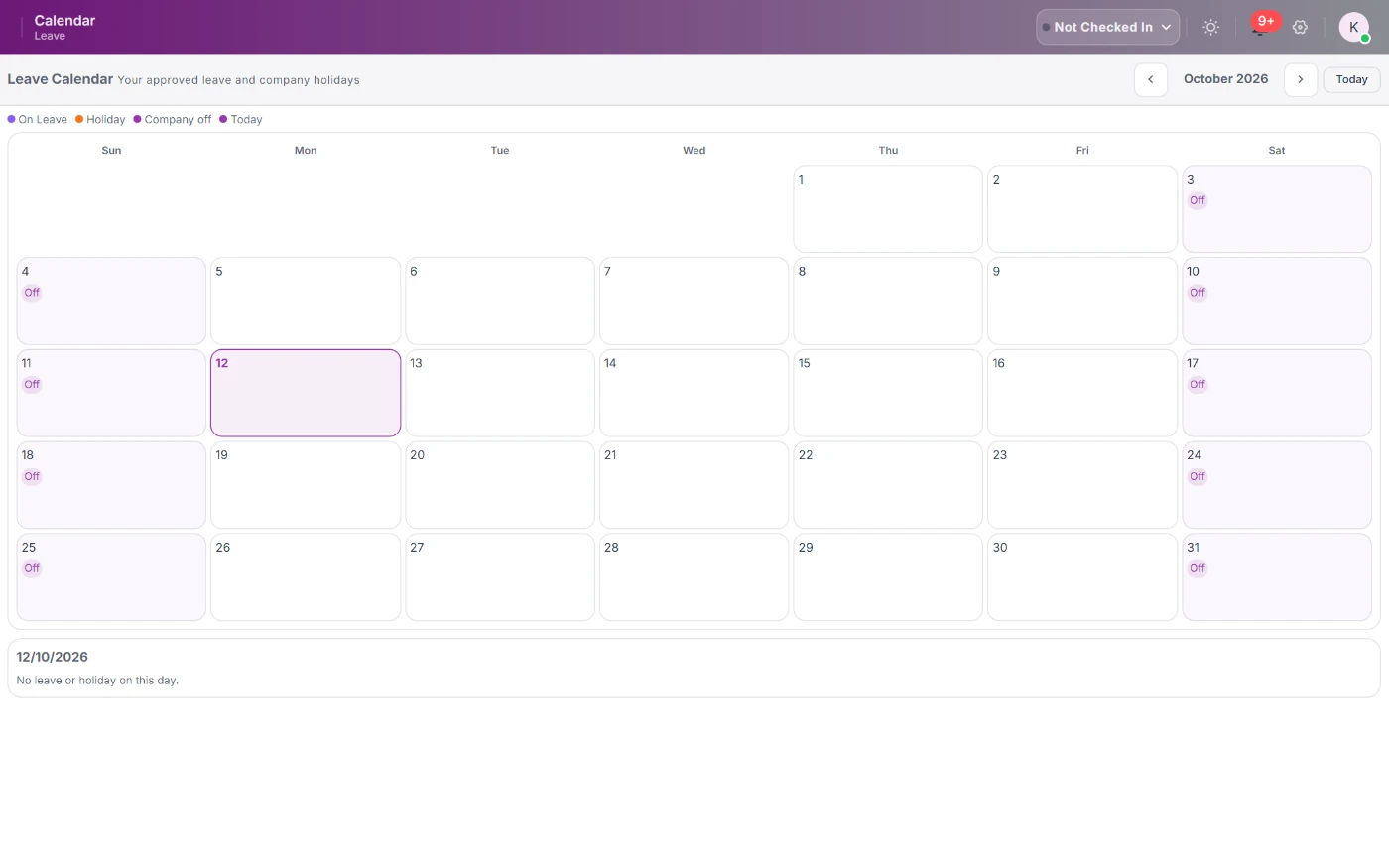
StreamHCM replaces that merge. Punches from a device at the Quetta gate, and punches from a Karachi or Lahore branch, land in one attendance record. Leave approvals happen in the app. Payroll reads that record instead of a sheet someone rebuilt on the 28th. The HR software Pakistan page is the product overview. This page is the Quetta, Balochistan version of the same system.
Balochistan payroll: BESSI beside EOBI
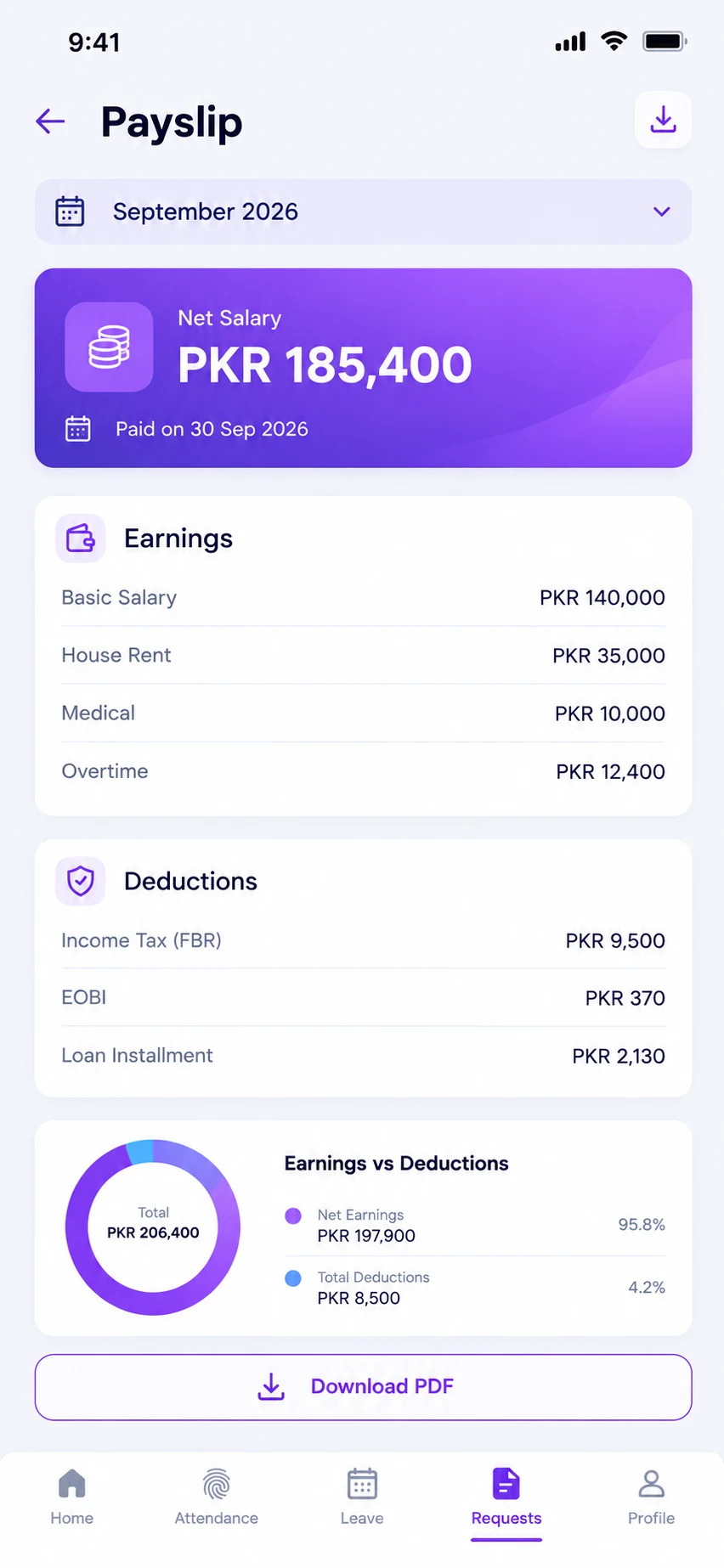
Quetta is in Balochistan, so the provincial social security institution is BESSI, the Balochistan Employees' Social Security Institution. It is not PESSI, which covers Punjab, and it is not SESSI, which covers Sindh. A payslip copied from a Lahore or Karachi template puts the wrong scheme on a Quetta employee.
Section 20(1) of the Balochistan Employees' Social Security Act, in the text published by the Government of Balochistan, requires the employer to pay the Institution a contribution at the rate of six per cent for every employee, whether employed directly or through another person. No contribution is payable on the part of wages above the upper wage limit determined under section 75. A further proviso says the rate of contribution shall be the minimum wage rate prevailing at the time of payment under the Balochistan Minimum Wages Act then in force. Section 20(2) says the employer shall not deduct their own share from the employee's wages, or otherwise recover any portion of the contribution, notwithstanding any agreement to the contrary. Read the Act itself before you lock the setting. The PDF is linked in the sources on this page.
Section 75 defines the lower wage limit as the minimum wage under the Balochistan Minimum Wages Act 2021, and the upper wage limit as that minimum plus fifteen per cent of it. The rupee ceiling moves when the province notifies a new minimum. This page does not turn that formula into a rupee amount, because the rupees are only as current as the notification you confirm.
The same Act defines a self-assessment scheme. Section 2(31) and section 21(1) say an employer who opts in pays six per cent of the lower wage limit per month for each secured employee. Section 21(3) says every secured employee in respect of whom the employer pays that contribution is liable to pay, through the employer, sixty rupees a month as their share. Section 23(4) says no staff member of the Institution visits that establishment to check books for two years. Sixty rupees is the figure printed in the Act we read. Ask BESSI whether a later notification has replaced it before you deduct it. StreamHCM stores the employer rate, the wage limits and any employee share as settings, so a notification is a change of setting rather than a new spreadsheet.
EOBI still applies in Quetta. It is a federal scheme. The employer pays 5% and the employee 1% of the notified minimum wage, not of actual gross pay. With the federal minimum wage of Rs 40,700 from 1 July 2026, EOBI's own circular puts that at Rs 2,035 employer and Rs 407 employee per insured person, due by the 15th of the following month. The EOBI contribution guide is the longer note, and it is the same reading used on our Hyderabad page. That Rs 40,700 base is the figure EOBI uses. It is not Balochistan's private-sector minimum wage, and it should not be typed into a Quetta wage check for that reason.
The Labour and Manpower Department site lists the Balochistan Minimum Wages Act 2021. The labour-laws page checked for this article does not publish an FY 2026-27 minimum-wage notification. The last widely reported notified unskilled rate was Rs 37,000 a month from 1 July 2024. A news report is not the gazette. Confirm the current notification with the department before you lock a payroll rule. The department page is linked under Sources. StreamHCM stores the figure you enter. It does not invent one. The minimum wage by province guide records the same 2026-27 gap and compares the other provinces.
FBR salary tax under Section 149 is federal, so a Quetta employer withholds it the same way an employer in any other city does: from the annualised salary, on the Tax Year 2027 slabs. This page does not reprint the slabs. Use the salary income tax guide and the tax slab calculator, and keep the result as a payroll setting with an effective date. A group with people in Quetta and people in Karachi or Lahore should not use one provincial rule for everyone. Attach BESSI and the Balochistan wage check to the Quetta branch, SESSI to a Sindh branch and PESSI to a Punjab branch, in the same payroll run.
What a Quetta HR team switches on
You do not have to turn on every module on day one. Most Quetta employers start with the records, the gate and the payslip.
Biometric and face attendance at the gate, plus mobile check-in for staff who move between a ward, a campus, a wholesale market or a site.
Shift rules for hospitals and site contractors, including night duties that cross midnight, grace minutes, late marks and overtime that waits for approval.
Payroll with salary structures, allowances, loans and advances, BESSI as an employer cost, EOBI, and FBR Section 149 tax.
Leave policies for annual, casual, sick and other types, with balances and approvals in the employee app.
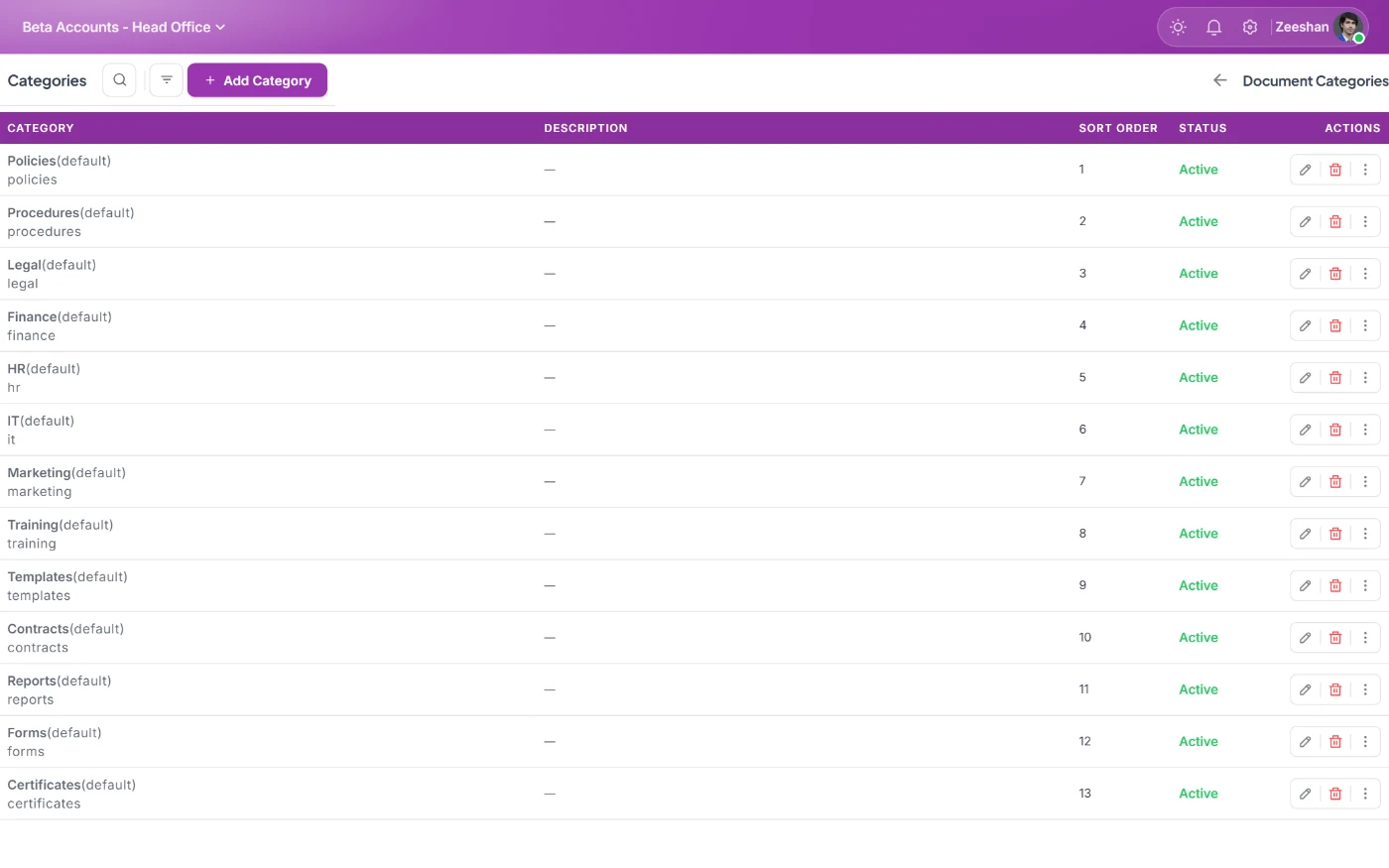
Employee records and a document vault for appointment letters, CNIC copies and, where a hospital or a university needs them, licences and certificates.
Branch setup so a Quetta site and a Karachi or Lahore head office share one login, with separate devices, holidays and statutory rules.
Universities, colleges and hospitals
The University of Balochistan, BUITEMS and the colleges around the city do not run one policy for everyone. Teaching staff, admin staff, laboratory staff and drivers do not share the same hours, and a second campus should not mean a second payroll file. StreamHCM lets you keep separate leave rules and shifts by staff group while the institution remains one employer. The school HR software page covers campuses in more detail, and the same split applies to a college that is not a school. Attendance can come from a device at the gate or from the app, and the payslip still carries BESSI, EOBI and tax where those apply to that employee.
Hospitals and clinics, including Bolan Medical College's teaching hospitals and the private hospitals in the city, have a roster problem rather than a register problem. Nurses, technicians and support staff rotate across day and night duties, and a duty that starts in the evening and ends after midnight has to count as one shift. StreamHCM matches punches to the duty you defined, holds overtime for approval, and can store council or licence documents on the employee record. The hospital HR software page describes rosters and documents. The statutory lines do not change because the workplace is a ward. Quetta is still Balochistan, so BESSI and EOBI are the schemes to configure, not a Punjab scheme copied from a sister hospital in Lahore.
Mines, the Chaman corridor and the wholesale trade
Mining and minerals work in the province is rarely a single gate in Quetta. A company may keep its accounts and its HR seat in the city and its crews with a contractor nearer the lease. Those crews still need a shift, an attendance record and a wage that can be reviewed against the minimum you have configured. Construction firms have the same split between a city office and people on sites. The construction HR software page covers check-in away from a desk and cost by site. StreamHCM can keep permanent staff and contract workers on one system with different employment types, so the Quetta office is not reconciling two workbooks at month end.
Trading houses tied to the Chaman and Afghanistan corridor, and the fruit and agriculture wholesalers who move produce through Quetta, have a different busy week. A mandi day, a shipment and a short-handed counter do not look like a factory's three fixed shifts. Mobile check-in covers staff who are not at a desk, and a branch holiday calendar can hold a Quetta closure that a Karachi head office does not observe. Smaller trading companies rarely want a long implementation. They want the register to stop being the system of record. HR software for SMEs is that starting point: employee records, attendance and one payroll, priced in PKR, without a server to install.
A Quetta site and a Karachi or Lahore head office
Many groups keep a Quetta workplace and the head office in Karachi or Lahore. Because the system is cloud-based, the Quetta admin and the head-office finance lead see the same attendance and the same payroll draft. Devices at the Quetta gate store punches locally and send them when the connection returns, so a short outage does not wipe the day. That matters on a link that is not as steady as the one inside a Lahore office.
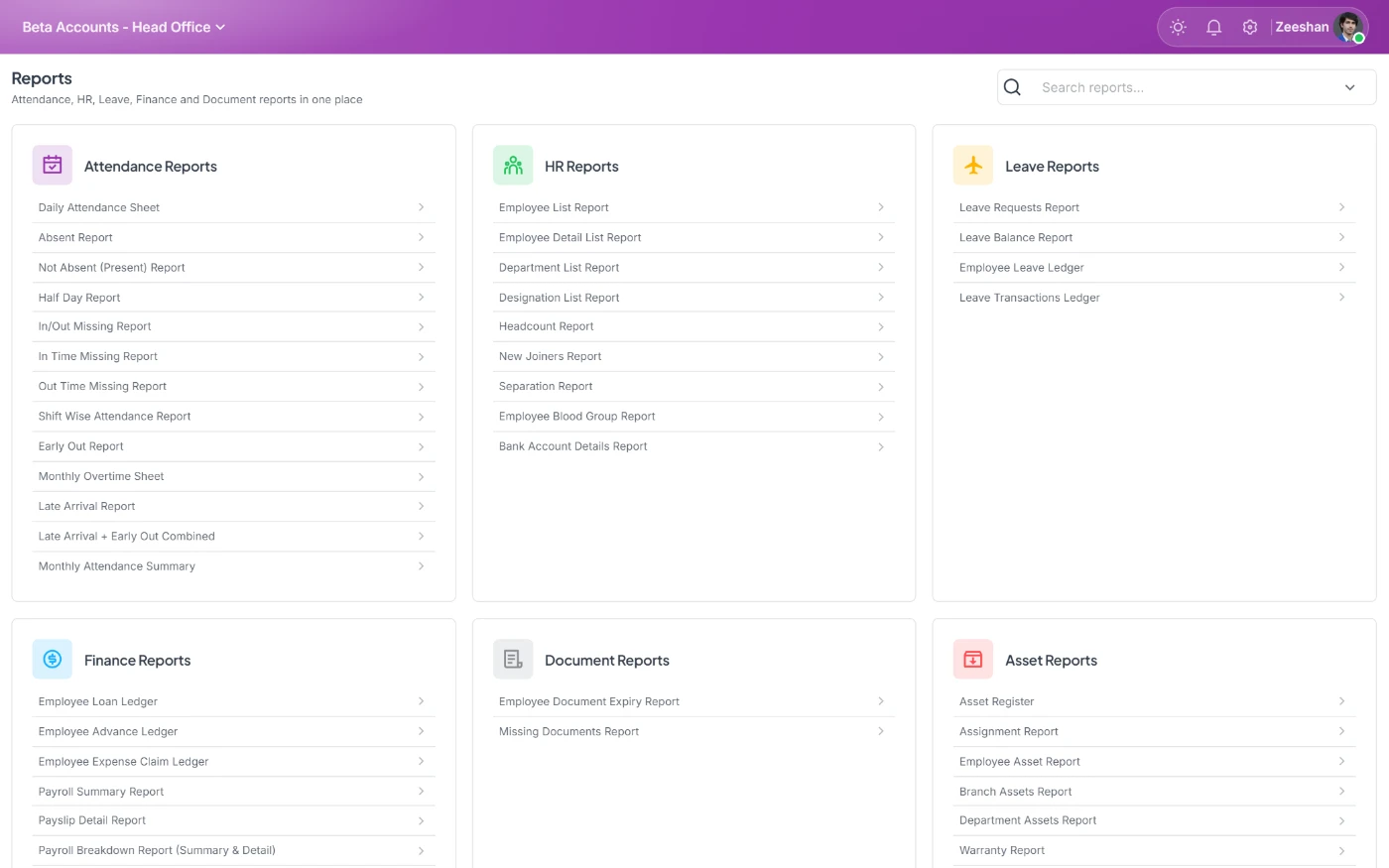
Holidays can differ by branch. A Balochistan public holiday that a Punjab or Sindh branch does not observe stays on the Quetta calendar. The payroll run can still be one run. Reports split headcount, attendance and cost by branch, which is the view a group needs when the Quetta site and the head office are different sizes and different shift patterns. Attendance management and payroll software explain those two halves. Multi-branch HR software is the note on running both cities from one account. Peshawar is the other provincial-capital page, for employers whose second branch is in Khyber Pakhtunkhwa rather than in Sindh or Punjab.
Getting started in Quetta
There is no Quetta office to visit. StreamHCM's team is in Lahore, at 68 MB, Zainab Tower, Model Town, Link Road, and supports Quetta customers remotely by phone, video and WhatsApp during Pakistani business hours. Setup is remote: import the employee list, connect the attendance device, map shifts, and load opening leave balances.
Every plan includes a 14-day free trial. The usual trial is one site, a parallel payroll beside your current sheet, and a line-by-line comparison before you switch. No card is taken on this site. Request the trial from the contact page, or read pricing for the PKR plans. If you also employ people in Karachi or Lahore, start with the Quetta branch and add the other branch once the first payroll matches, with BESSI on Quetta and that province's own scheme on its own branch.
Frequently asked questions
Quetta is in Balochistan, so BESSI applies to covered employees, alongside federal EOBI and FBR salary tax. PESSI is the Punjab scheme and SESSI is the Sindh scheme. Neither belongs on a Quetta branch.
Section 20 of the Balochistan Employees' Social Security Act says the employer pays a contribution at the rate of six per cent, and section 20(2) says the employer shall not deduct their own share from the employee's wages. The self-assessment scheme in the same Act is six per cent of the lower wage limit. Confirm wage limits and any later notification with BESSI before you lock the setting.
Do not use Rs 40,700. That figure is the federal base EOBI uses, not a Balochistan private-sector minimum. We did not find an FY 2026-27 notification on the Labour and Manpower Department site. The last widely reported notified unskilled rate was Rs 37,000 a month from 1 July 2024. Confirm the current notification with the department before you lock a rule. StreamHCM stores the figure you configure.
Yes. EOBI is federal. The on-site EOBI guide sets out the 5% employer and 1% employee shares of the notified minimum wage, and the rupee amounts in EOBI's 2026-27 circular. Those amounts are not Balochistan's provincial minimum wage.
Yes. Each branch has its own devices, shifts, holiday calendar and statutory rules. A Quetta employee can carry BESSI while a Karachi colleague carries SESSI and a Lahore colleague carries PESSI, in one payroll run.
No. The team is based in Lahore, at 68 MB, Zainab Tower, Model Town, Link Road, and supports Quetta customers remotely. The software is cloud-based, so nothing is installed on your own server. The 14-day trial does not take a card on this site.
See StreamHCM running your HR
Request a 14-day trial. No card is taken on this site.