
HR and payroll software for NGOs and development organisations in Pakistan
NGOs and development organisations in Pakistan run on projects: staff hired against grants, time charged to donors, field teams in districts far from the office, and audits that ask for proof of every rupee spent on salaries. StreamHCM gives them HR and payroll that follows the project, not just the calendar.
Why NGO HR is different
A single staff member may be funded partly by one donor and partly by another, on a contract that ends with the grant. Leave entitlements differ between core and project staff. Field staff work in communities where there is no office to check in at. And donors and auditors want salary costs allocated to the right project with supporting attendance or timesheets.
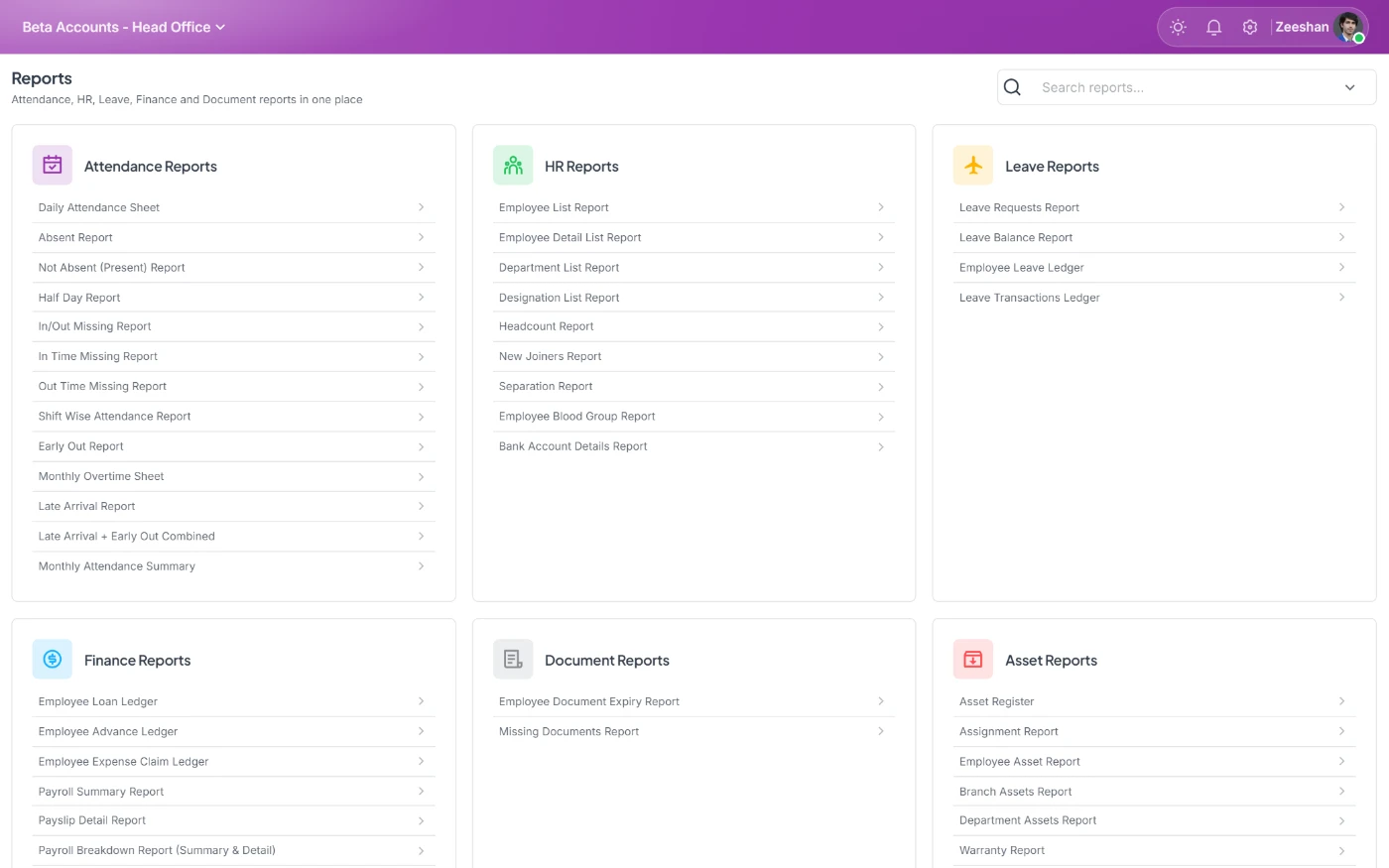
StreamHCM records each employee's contract and cost centre. Cost centres keep salary costs grouped by project or donor, so reports show salary cost per cost centre, which makes donor reporting and audit preparation much faster.
Features for NGOs
- Cost centres on the employee record for project and donor reporting.
- Fixed-term contracts with end dates matching the grant.
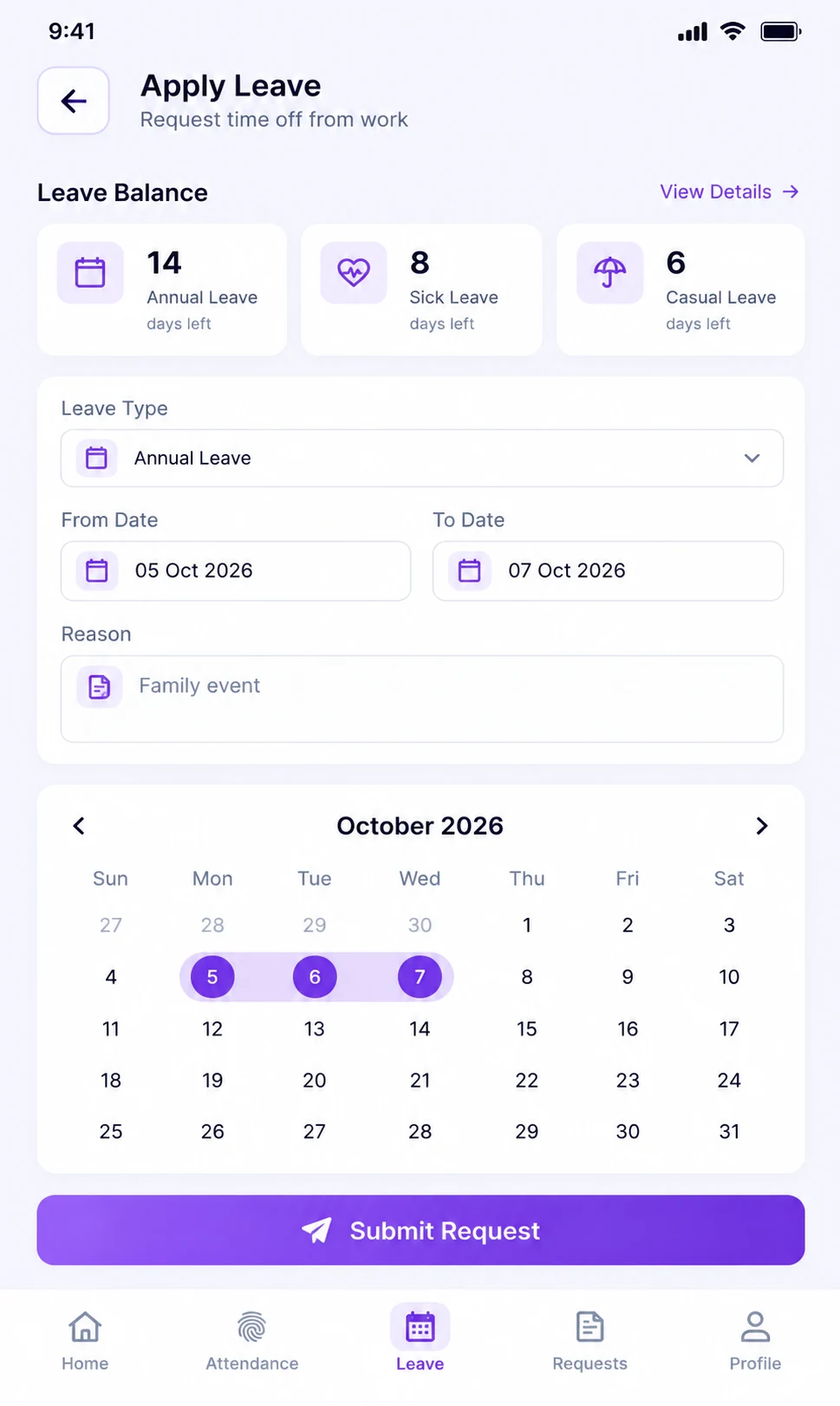
- Leave policies by contract type for core and project staff.
- Field check-in with GPS from the mobile app, including in districts without an office.
- Timesheets or attendance as supporting evidence for donor-funded salary costs.
- Documents, contracts and policy acknowledgements stored per employee.
- Recruitment with transparent shortlisting records for donor-compliant hiring.
Audit-ready payroll
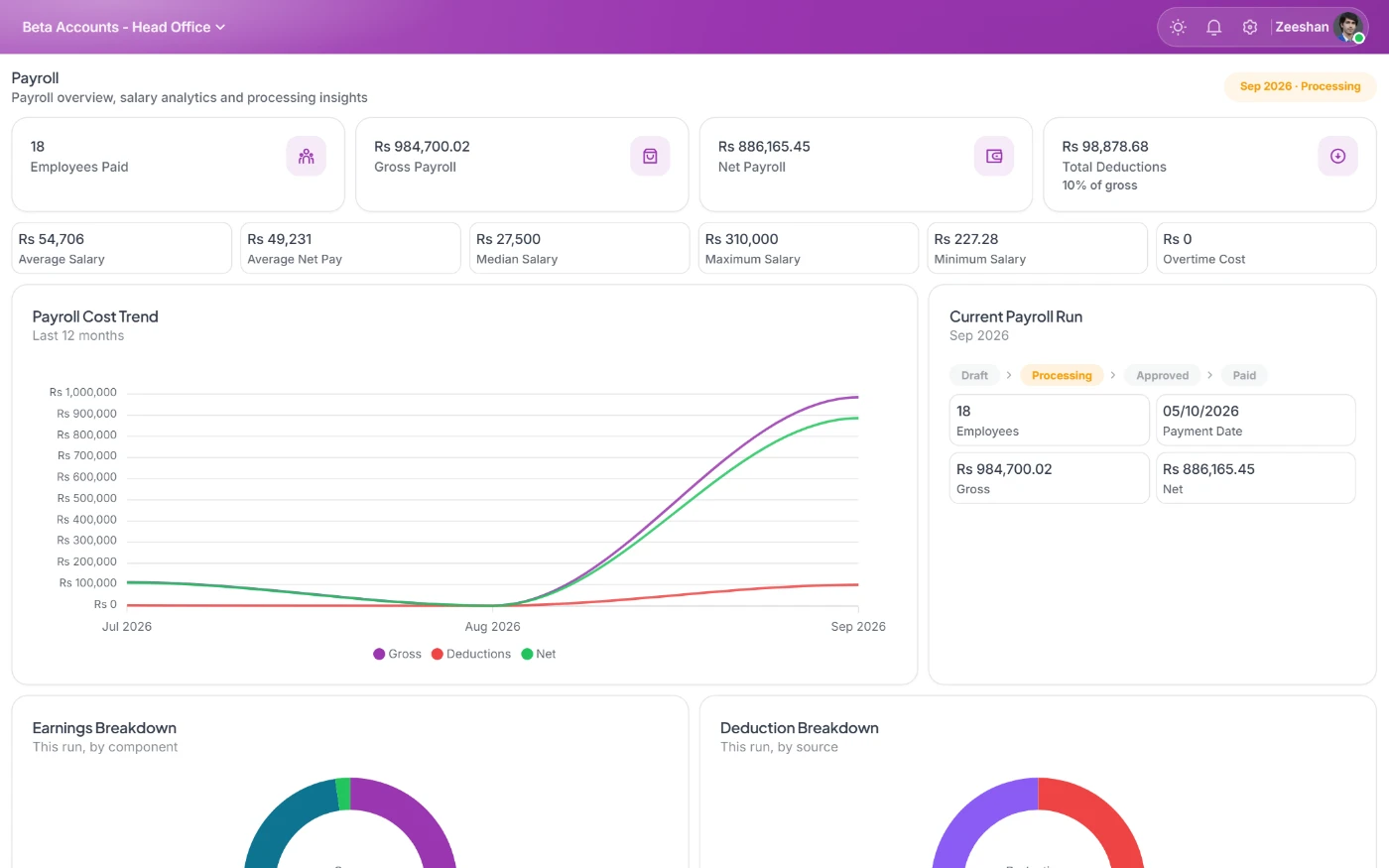
Donor audits often sample payroll and ask for the contract, the attendance or timesheet, the payslip and proof of payment for each sampled employee. Because StreamHCM keeps these on the same record, producing them is a search, not a hunt through folders. Every change to salary or allocation is logged with who made it and when.
Pakistani payroll compliance built in
Payroll in StreamHCM includes the statutory items Pakistani employers deal with every month: FBR salary tax withheld under Section 149 using the Tax Year 2027 slabs, EOBI at 5% employer and 1% employee of the notified minimum wage, and provincial social security such as PESSI in Punjab or SESSI in Sindh, set per branch. Rates are settings rather than spreadsheet formulas, so when a new notification arrives payroll is updated once and every later run uses it, while finalised payslips stay exactly as they were paid.
Ending a project cleanly
When a project closes, contracts end together. StreamHCM lists staff whose contracts end on a date, calculates final settlement including leave encashment, and produces experience letters, so closing a project does not mean a month of manual work.
Data security
NGOs handle sensitive data about staff and sometimes communities. StreamHCM uses role-based access so project managers see only their teams, finance sees payroll, and HR sees what it needs, with an audit log of changes.
Implementing StreamHCM in an NGO
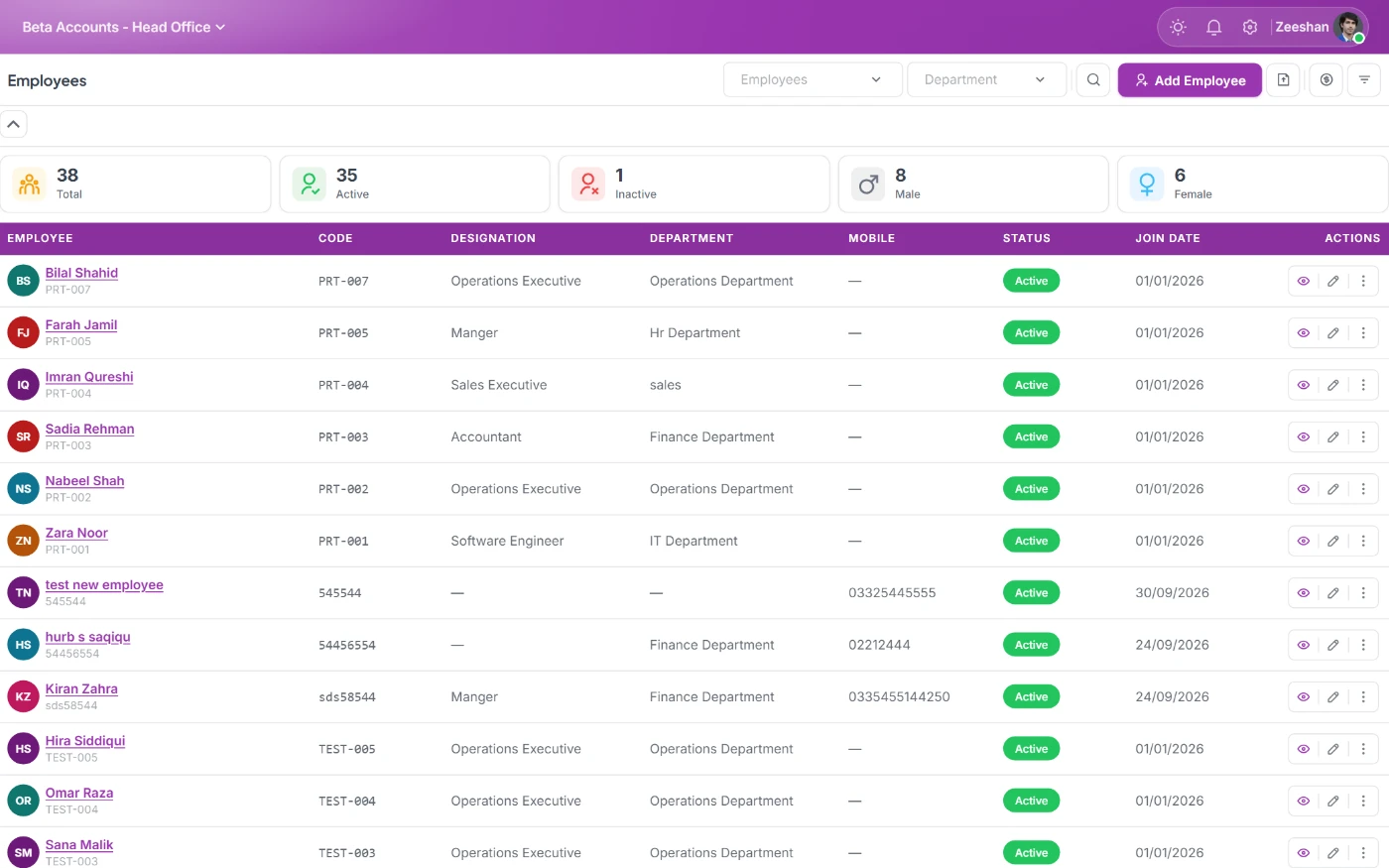
Begin by setting up projects and cost centres, then import staff with their contracts and funding allocations. Configure leave policies for core and project staff, roll out the app to field teams and run a parallel payroll with project cost reports. Check that the reports match how your donors want salary costs presented before going live.
Compliance for NGOs
NGOs are employers like any other for EOBI, provincial social security, minimum wage and FBR salary tax, and donor agreements often add their own requirements, such as approved salary scales or restrictions on allowances. StreamHCM lets you configure salary structures to match donor-approved scales and keeps the history of every change.
Recruitment that stands up to scrutiny
Donors often require transparent, documented hiring. StreamHCM keeps the job posting, applications, shortlisting decisions, interview panels and scores on record, so you can show how each hire was made. Selected candidates move straight into onboarding with their contract and project allocation.
Field safety and communication
Field staff in remote districts benefit from simple communication tools: announcements, policy updates and emergency notices sent through the app, with read receipts. HR can see who has acknowledged a security or travel policy, which many donors and insurers expect.
Assets issued to field teams, such as laptops, phones and vehicles, are recorded against each employee and recovered when a contract ends.
This also helps with duty-of-care reporting to donors.
Frequently asked questions
Yes. Assign each employee to a cost centre for the project or funding source, and reports show salary cost per cost centre.
Yes. Field staff check in from the mobile app with GPS location.
Yes. Leave policies are assigned by contract type or employee group.
Contracts, attendance, payslips and payment records are kept on one employee record, and changes are logged.
Staff on contracts ending with the grant can be listed together, and final settlements and letters generated.
See StreamHCM running your HR
Start a 14-day free trial, no credit card required.