
Factories: the Factories Act 1934
For workers in factories, the Factories Act 1934 as it applies in the provinces is the traditional source. It provides annual leave of 14 consecutive days with pay after twelve months of continuous service, casual leave of 10 days a year with full pay, and sickness leave of 16 days a year on half average pay. Unused annual leave can generally be carried forward within limits set by the Act.
- Annual leave: 14 days with pay after 12 months' continuous service.
- Casual leave: 10 days a year on full pay.
- Sick leave: 16 days a year on half average pay.
Shops and commercial establishments: the 1969 Ordinance
For shops and commercial establishments, including offices, the West Pakistan Shops and Establishments Ordinance 1969, as adopted by the provinces, is the usual reference. Summaries of the Ordinance describe 14 days of annual leave with pay after twelve months of continuous employment, 10 days of casual leave on full wages and 8 days of sick leave on full wages, with unused sick leave carried forward up to a limit. Annual leave can also be accumulated within limits.
- Annual leave: 14 days with pay after 12 months' continuous employment.
- Casual leave: 10 days a year on full wages.
- Sick leave: 8 days a year on full wages, with limited carry-forward.
Provincial codes and newer laws
Labour is a provincial subject since the 18th Amendment, and provinces are updating these laws. Punjab has consolidated its labour legislation into the Punjab Labour Code 2026, and Sindh has enacted several of its own labour statutes. Entitlements may be restated, renumbered or changed in these instruments, so employers should check the provincial law that applies to each workplace. Maternity leave and other special leave types are also set by provincial and federal laws and should be included in policy.
Public holidays
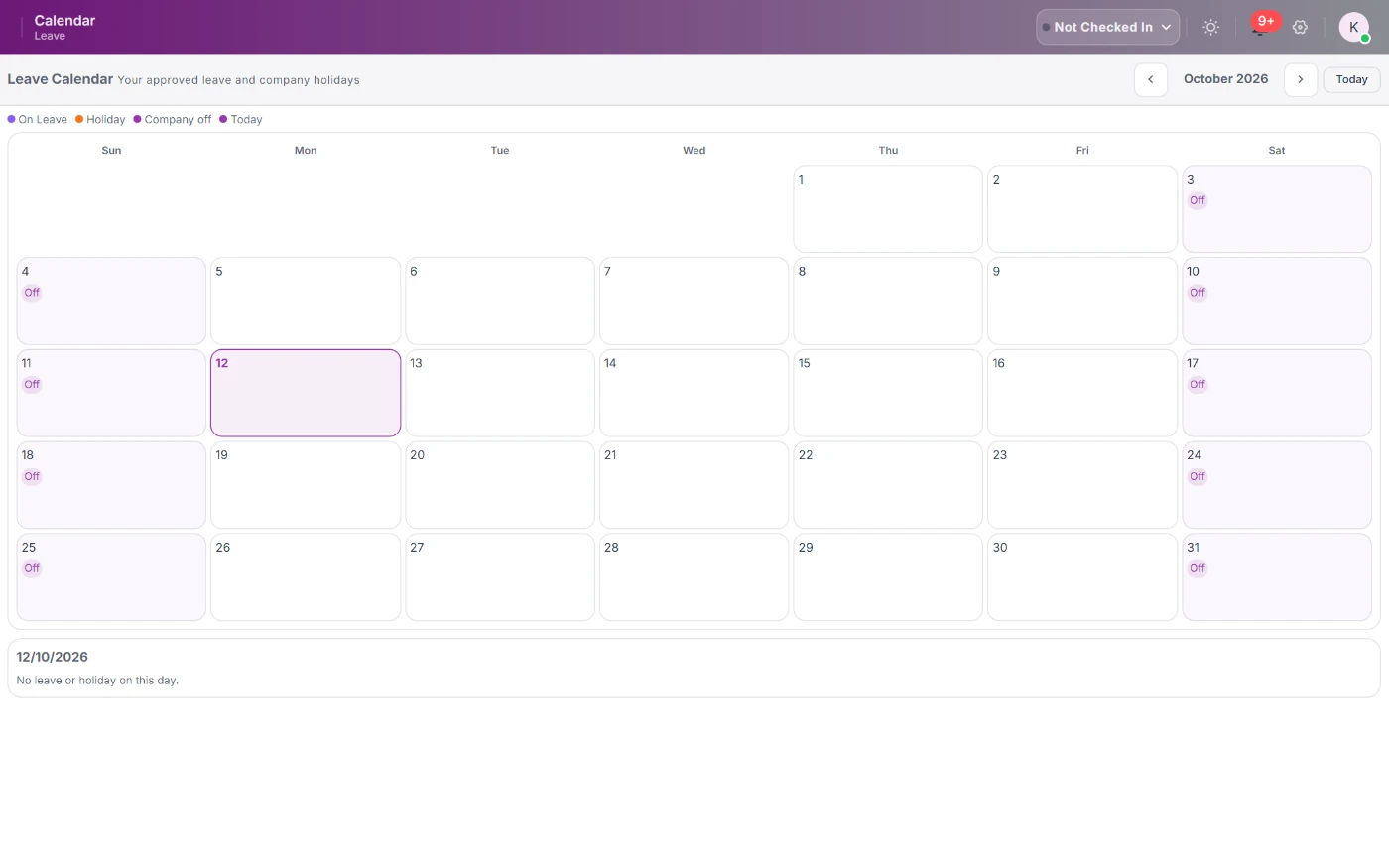
Federal and provincial governments notify public holidays each year, and Eid dates depend on moon sighting. Workers required to work on a public holiday are normally entitled to compensation under the applicable law or policy. A leave system should hold the holiday calendar per location so attendance and payroll treat those days correctly.
Building a compliant leave policy
- Start from the statutory minimum for each establishment type and location.
- Decide whether your policy is more generous, and write down accrual, carry-forward and encashment rules.
- Define how leave interacts with payroll: paid, half-paid or unpaid.
- Set approval chains and notice periods for each leave type.
- Keep a holiday calendar per province or branch.
- Give employees visibility of their own balances to reduce disputes.
Leave and final settlement
Unused annual or earned leave is commonly encashed when employment ends, while casual and sick leave usually are not. Clear balances during employment avoid arguments at exit and make the final settlement easier to calculate.
Managing leave in StreamHCM
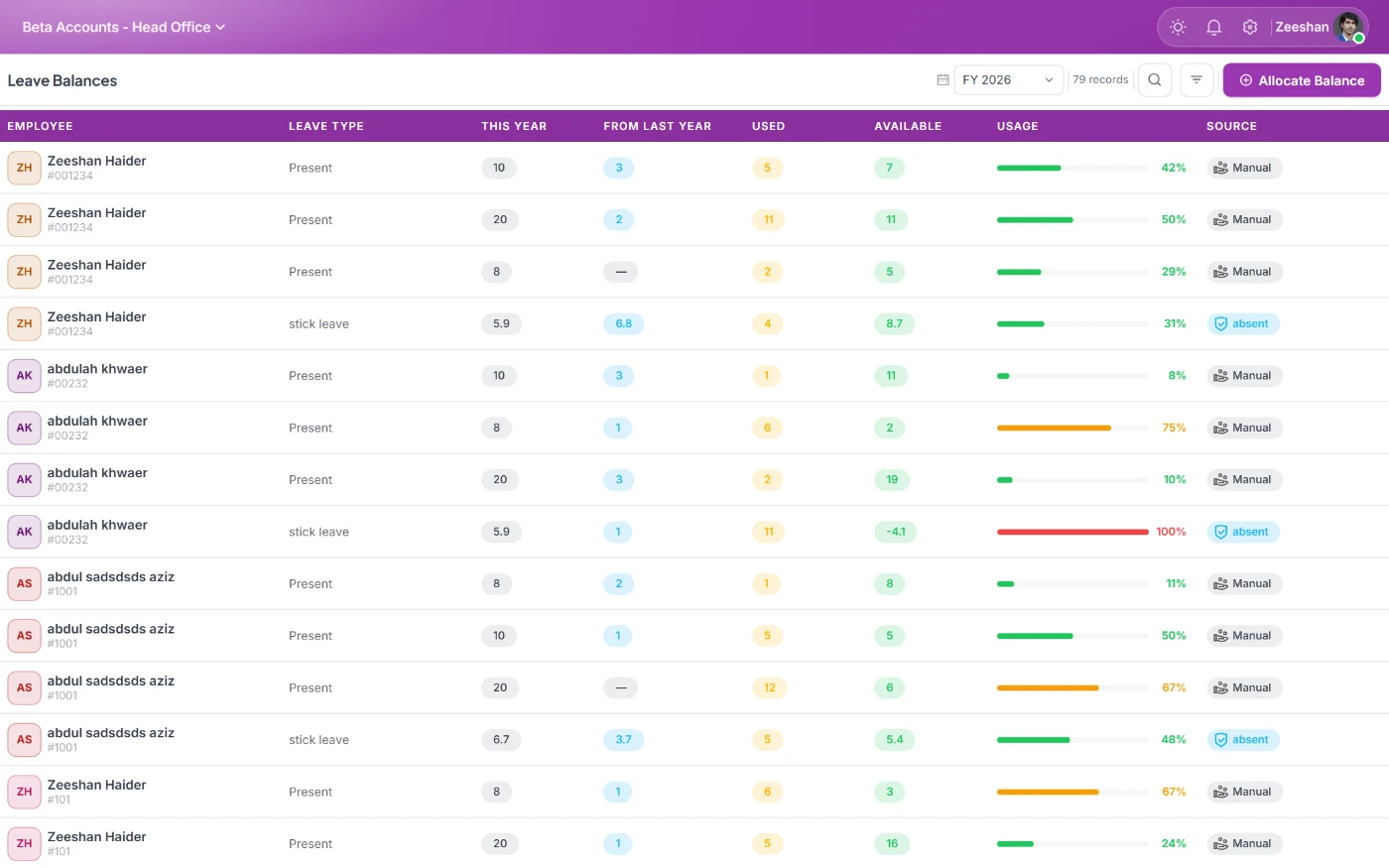
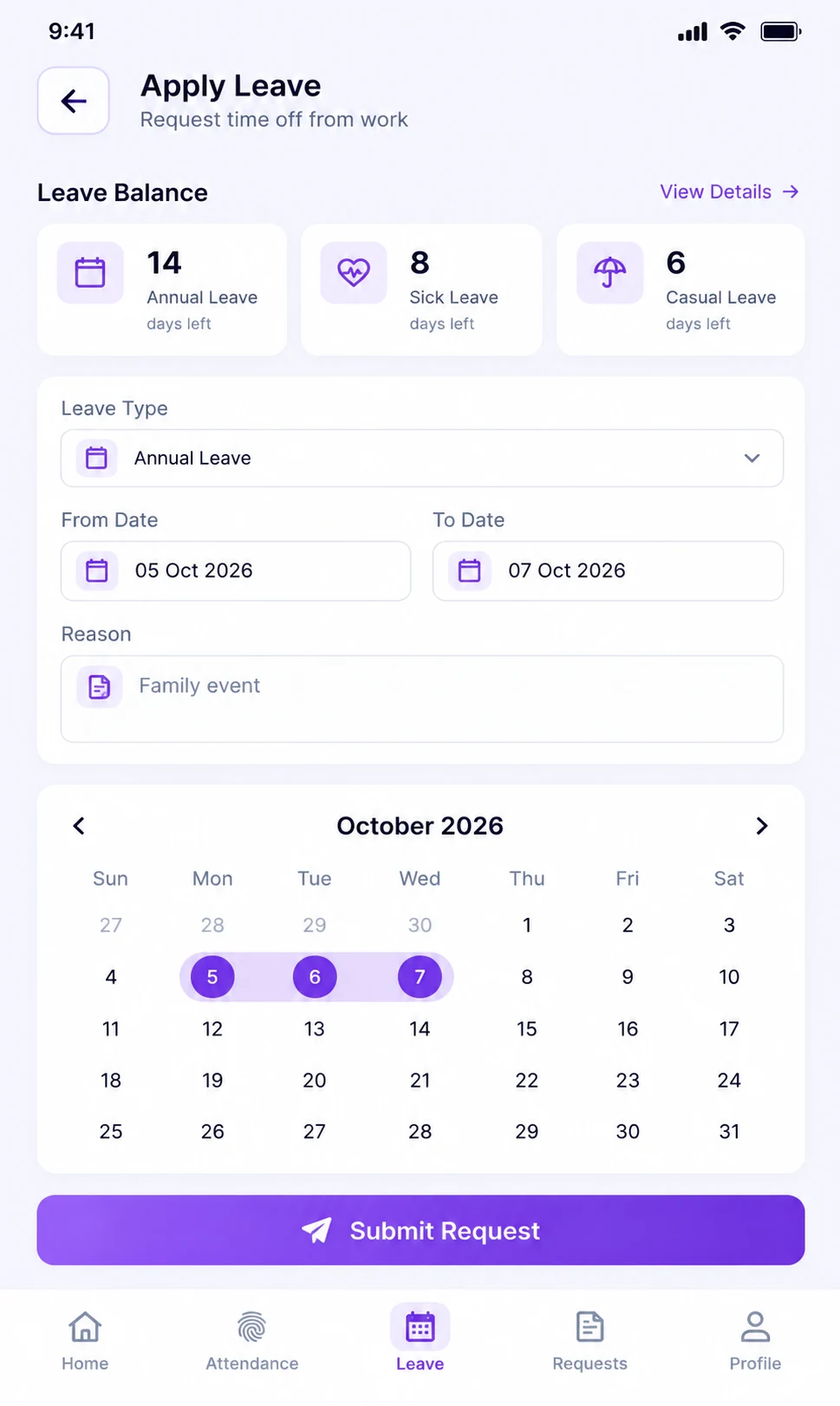
StreamHCM lets you define every leave type with its accrual formula, waiting period, carry-forward cap, encashment rule and pay treatment, then assign policies by branch, department or employee group. Employees request leave in the app, managers approve on their phones, and approved leave flows into attendance and payroll automatically.
Maternity and other special leave
Maternity leave is governed separately from annual, casual and sick leave. Federal and provincial maternity benefit laws, and in Sindh and Punjab their newer provincial versions, set paid maternity leave, and some provinces have introduced paternity leave for certain employees. Because these provisions have changed in recent years, read the current text of the law that covers your workplace and set up maternity and paternity leave as separate leave types with their own rules.
About this guide
This guide is general information, checked against the sources listed below on 24 October 2026. It is not legal or tax advice; confirm current notifications with the relevant authority or your adviser before acting.