
HR and payroll software for Rahim Yar Khan businesses
Rahim Yar Khan's economy is built on agriculture and the industries around it: sugar mills, fertiliser and chemical plants, cotton ginning, oil mills and the distributors, transporters, hospitals and schools that serve the district. StreamHCM gives these employers a cloud HR and payroll system that works for both permanent plant staff and seasonal workers.

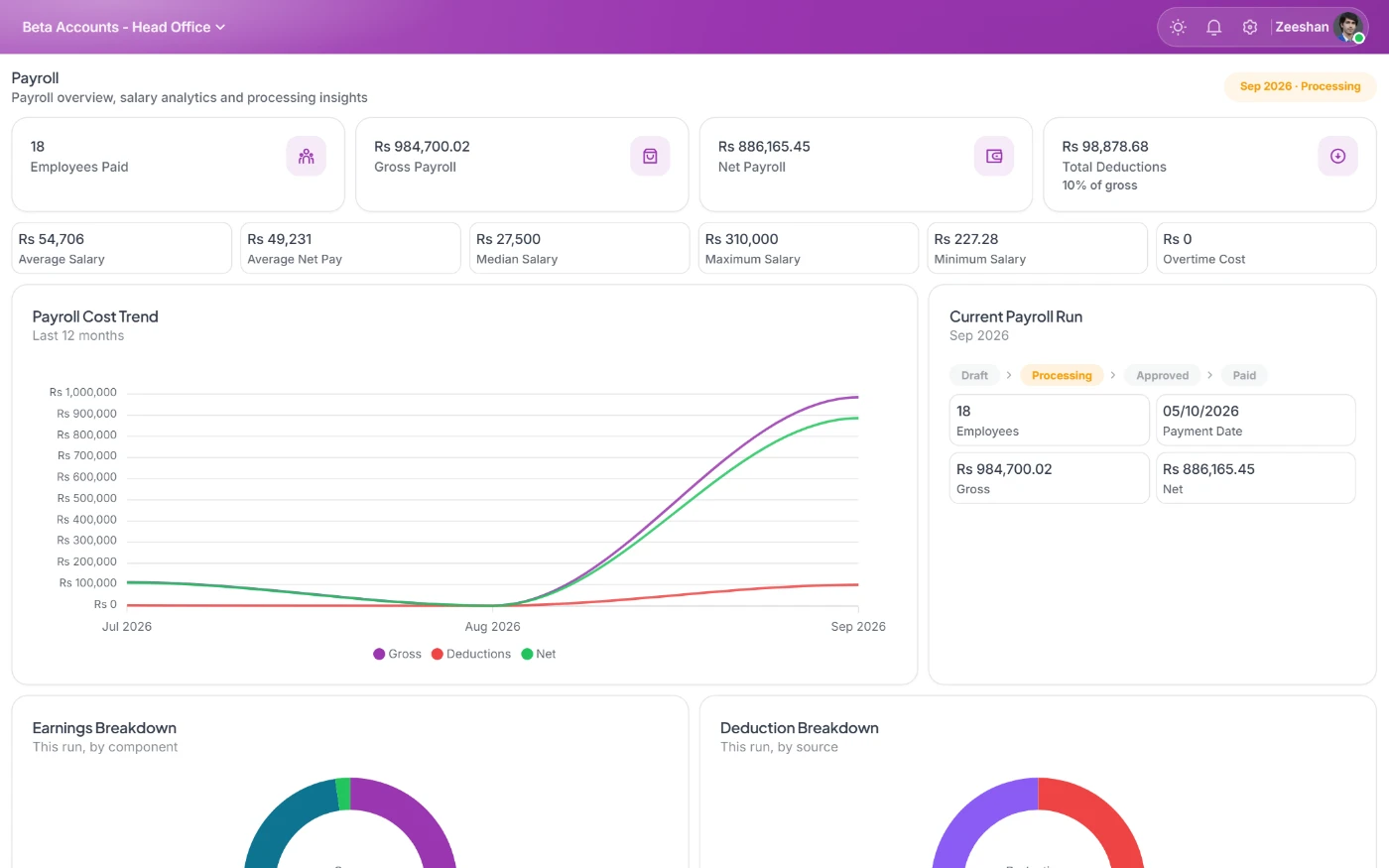
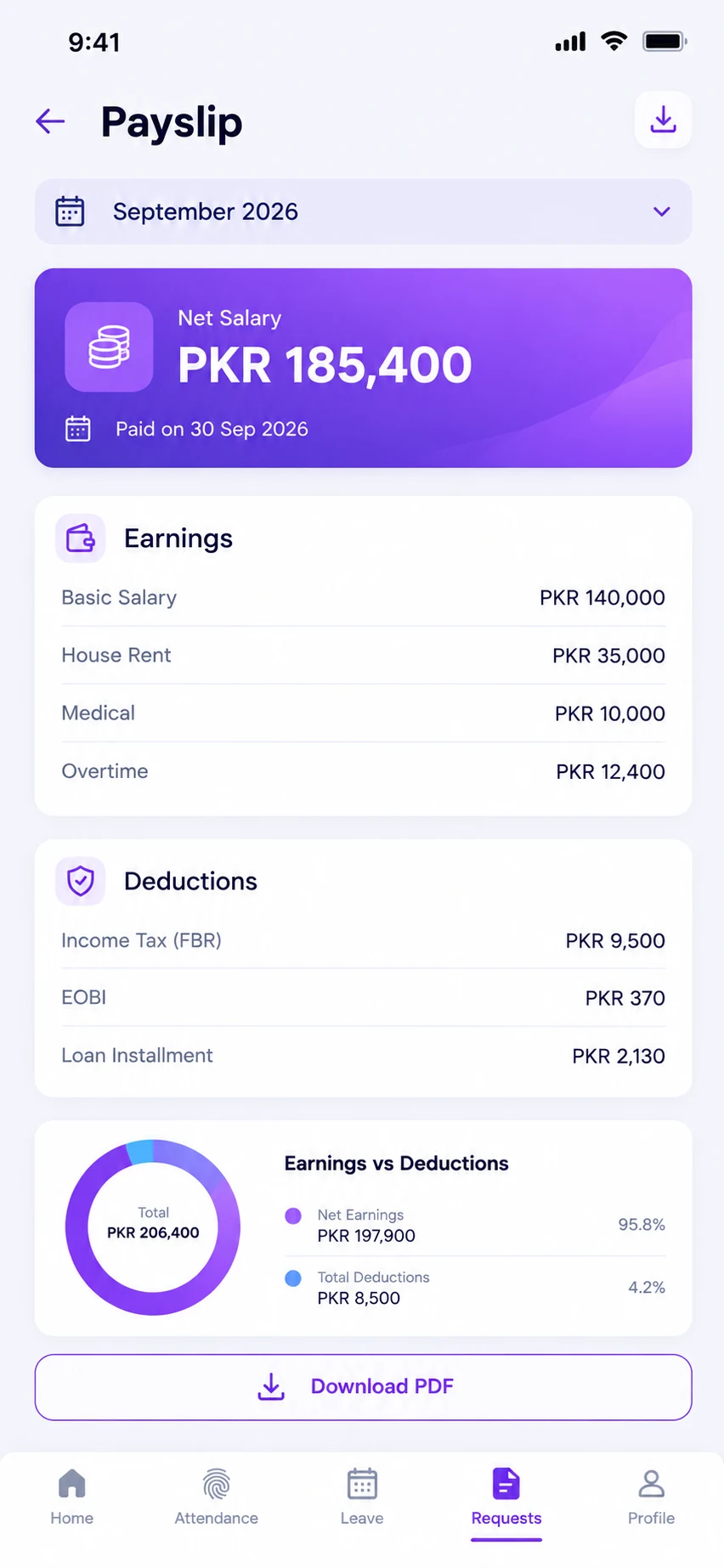
The crushing season problem
Sugar mills in the district run their heaviest operations during the crushing season, when they add large numbers of seasonal and contract workers, run round-the-clock shifts and pay significant overtime. When the season ends, those workers leave and need final settlement. Doing that on spreadsheets means a payroll team working through the night at both ends of the season.
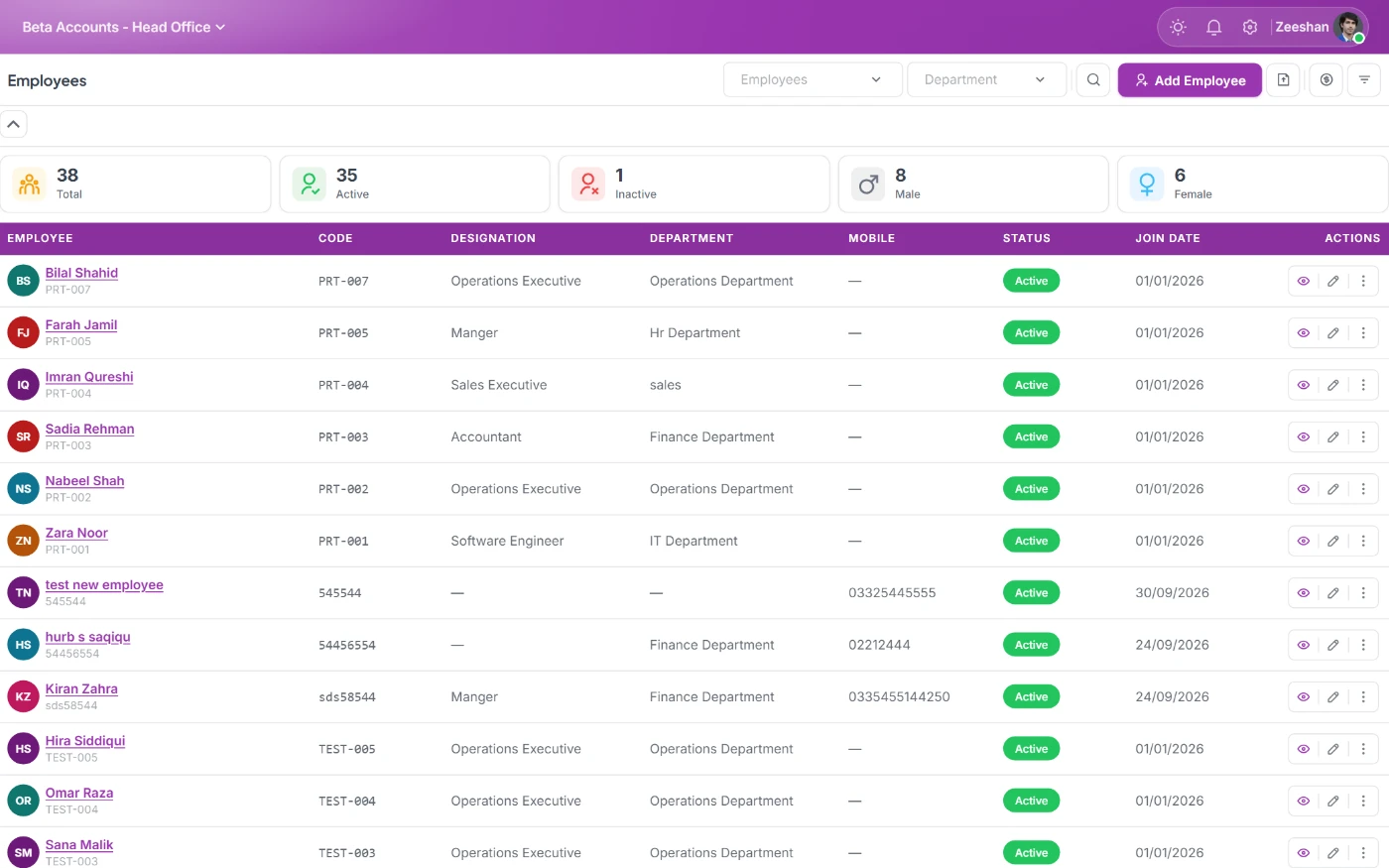
StreamHCM handles the cycle in one system. Seasonal joiners are imported in bulk with their CNIC, shift and contract dates; attendance comes from gate devices; overtime is approved before payroll; and at season end, final settlement is calculated from actual attendance and pay. Their records stay on file, so rehiring next season takes minutes.
Punjab payroll compliance for Rahim Yar Khan employers
Companies in Rahim Yar Khan fall under Punjab's provincial labour framework, so payroll has three statutory layers to get right every month. The first is EOBI, a federal scheme: the employer pays 5% and the employee 1% of the notified minimum wage, not of actual gross pay. With the federal minimum wage of Rs 40,700 from 1 July 2026, EOBI's own circular puts that at Rs 2,035 employer and Rs 407 employee per insured person, due by the 15th of the following month.
The second is PESSI, the Punjab Employees Social Security Institution. The employer contributes 6% of wages for covered workers and may not recover it from the employee. A Punjab notification of February 2026 fixed the monthly wage ceiling for contribution at Rs 40,000, so the contribution for a covered worker does not rise above that wage base. The third is FBR salary income tax under Section 149, withheld monthly from the annualised salary using the Tax Year 2027 slabs.
Punjab also consolidated many labour statutes into the Punjab Labour Code 2026. Its transition provisions keep earlier notifications, such as the minimum wage of Rs 40,000 a month notified for 2025-26, in force until they are replaced, so HR teams should check the Labour Department's site before each budget cycle. StreamHCM keeps these rates as configurable payroll settings, so a new notification is a settings change rather than a spreadsheet rebuild.
Features for plants and agri businesses
Twelve-hour and three-shift patterns, including night shifts that end the next morning.
Contractor, seasonal and permanent staff in the same system with separate reports.
Overtime approval workflows so overtime is authorised before it is paid.
Daily-wage payroll alongside monthly salaries.
Housing, transport or meal deductions where they are agreed with staff.
Reports by plant, department and contractor.
Working with a remote HR office
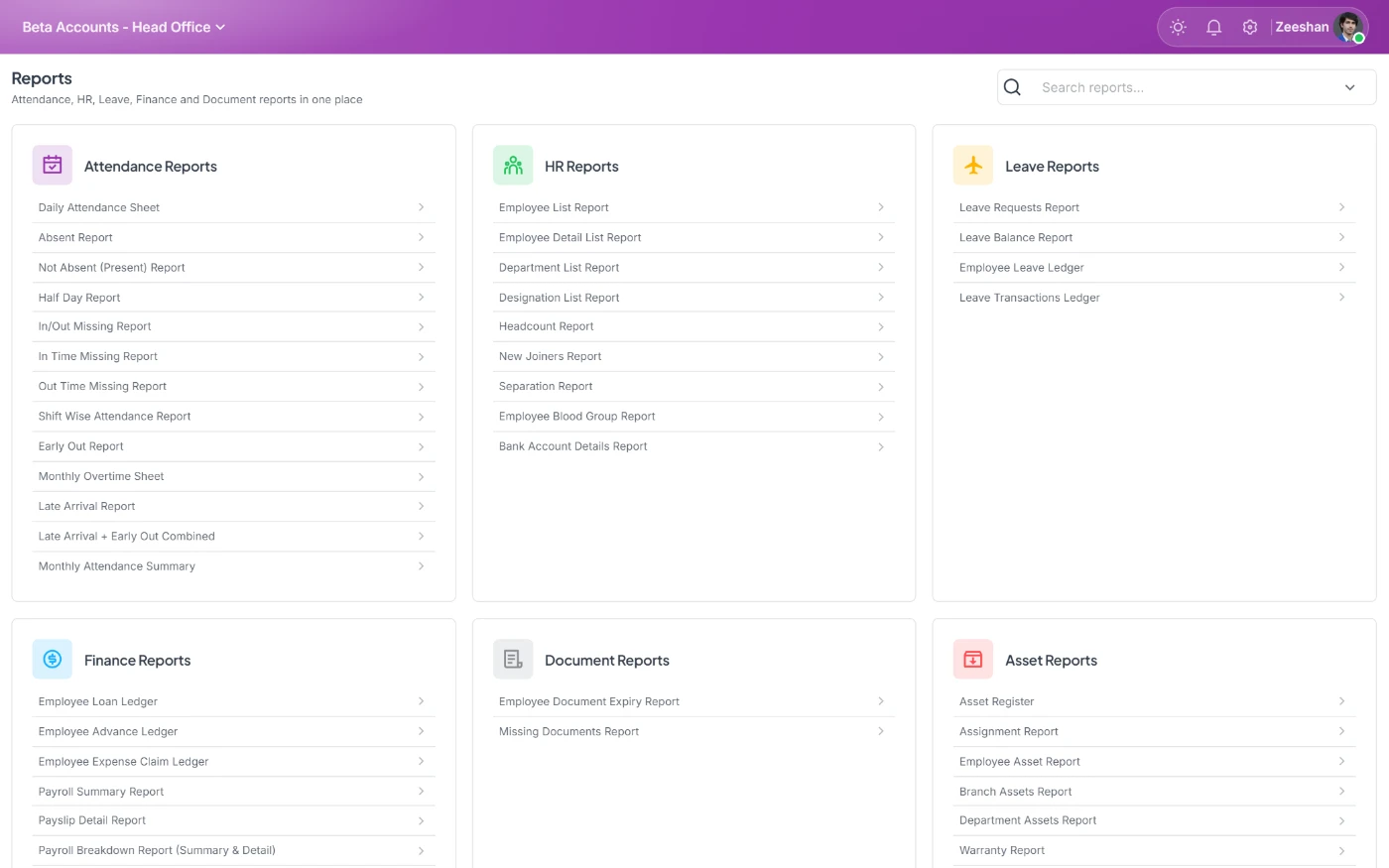
Many Rahim Yar Khan plants report to a head office in Lahore or Karachi. Because StreamHCM is cloud-based, head office HR and finance can see plant attendance and approve payroll without waiting for files to be emailed. Every plan includes a 14-day free trial.
Typical Rahim Yar Khan HR scenarios
Rahim Yar Khan's employers include sugar mills, cotton ginning and textile units, fertiliser and agro-businesses, as well as schools, hospitals and traders. Sugar and ginning are seasonal: the crushing or ginning season brings a surge of workers for a few months. StreamHCM lets HR add seasonal workers quickly, assign them to shifts, pay them correctly and close their contracts with final settlement when the season ends.
Mills in the district often run around the clock in season with three shifts. Devices at the gate feed attendance against each worker's shift, and night shifts that cross midnight are counted correctly.
Punjab's minimum wage, PESSI, EOBI and FBR salary tax all apply. Payroll in StreamHCM includes them with rate settings you update when rates change.
Getting started in Rahim Yar Khan
Setup is remote, so location is not a barrier: import employees, connect devices and run a parallel payroll during the 14-day trial. Our Lahore-based team helps throughout.
Frequently asked questions
Yes. Seasonal workers can be imported in bulk with contract dates, and final settlement at season end is calculated from their actual attendance.
Yes. Contractor workers can be recorded under their contractor, with attendance and reports kept separately from permanent staff.
Yes. StreamHCM is cloud-based, so authorised users anywhere can review attendance and approve payroll.
Punjab's framework applies, including PESSI for covered workers and Punjab's minimum wage notification, along with EOBI and FBR tax.
Attendance devices store punches locally and sync when the connection returns, so no attendance is lost.
See StreamHCM running your HR
Start a 14-day free trial, no credit card required.